

Top Multimodal AI Companies Shaping the Future of Multimodal Intelligence
- MLJ CONSULTANCY LLC

- 20 minutes ago
- 13 min read
Multimodal AI | A model that can read a contract, inspect a photo, listen to a voice note, summarize a video, and answer in plain language is no longer a lab demo. It is becoming the main direction of artificial intelligence.
That shift matters because most real-world information is mixed. A patient record may include typed notes, scanned forms, images, lab values, and spoken concerns. A video library contains faces, actions, speech, background text, and time stamps. A customer service case may start as a chat, move to a phone call, and end with a photo of a damaged product.
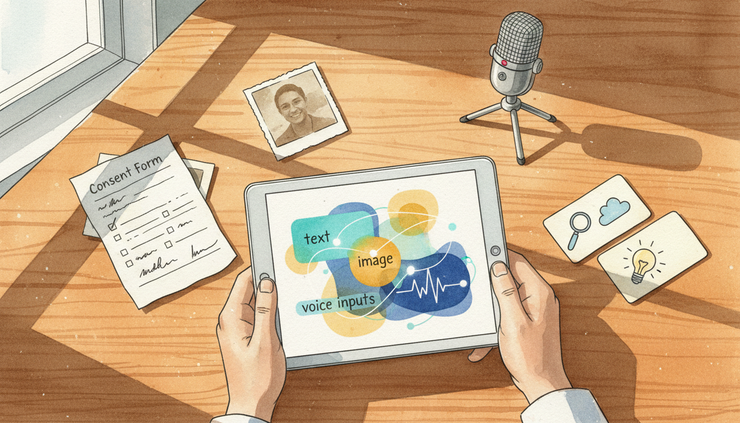
The companies building multimodal ai are trying to make machines handle that messy mix more like people do. They are not just making chatbots that write better paragraphs. They are building systems that connect text, images, audio, video, and structured data so software can understand context across formats.

What makes a company strong in multimodal intelligence
A strong multimodal AI company usually has more than one good model. It needs a full system that can handle messy inputs, give useful answers, and stay reliable in real use.
The best companies tend to build around five capabilities.
They process multiple input types.
Text is the base layer, but images, voice, video, documents, and tables all play a role. A model that can describe an image is useful. A model that can compare that image with a written report, ask a follow-up question, and explain its reasoning is much more useful.
They combine signals rather than treating each file alone.
For example, a video system might read captions, listen to speech, identify a scene, and track movement over time. A medical intake assistant might read a form, listen to a patient’s explanation, and flag missing details for a human clinician.
They keep context over time.
This is important for long videos, large document sets, and ongoing conversations. Google has emphasized long-context capability in parts of its Gemini series, while other leading labs have worked on longer memory windows and better retrieval from uploaded files.
They connect models to workflow tools.
A useful system does not stop at “Here is a summary.” It may route a support ticket, fill a document field, search a video archive, or prepare a draft that a person reviews.
They manage safety, privacy, and error risk.
Multimodal systems can make mistakes in more than one way. They can misread a chart, mishear a speaker, miss visual context, or blend facts from different sources. This is why high-stakes use, especially healthcare, needs testing, clear limits, and human review.
The major AI companies are setting the pace
The largest AI labs have the advantage of research talent, computing power, data partnerships, and wide distribution. Their models shape what customers expect from multimodal tools.
Company | Main multimodal focus | Why it matters |
Gemini models that work across text, images, audio, video, and code | Strong research base and access to search, mobile, and cloud-scale use cases | |
OpenAI | GPT models with voice, image, and real-time interaction features | Popularized general-purpose assistants that can see, listen, and respond |
Microsoft | AI features built into work, developer, and cloud tools | Brings multimodal systems into everyday business processes |
Anthropic | Claude models with strong document and visual reasoning | Focuses on helpful, safer model behavior for complex knowledge tasks |
Meta | Open-weights models and research releases | Gives developers more control over how models are studied and adapted |
Google and the Gemini series are built for many inputs
Google has been one of the most important players in multimodal AI research for years. Its public research record includes major work in language models, vision systems, speech recognition, translation, and video understanding. Gemini brought these lines of work under one model family.
Google describes Gemini as designed from the start to work across different types of information. That is different from older systems where one model handled text, another handled images, and a separate tool tried to connect the results.
Gemini’s key strengths include:
Reading and explaining images
Summarizing long documents
Handling audio and video inputs in supported versions
Reasoning across text and visual context
Using long context windows in some models
Supporting software development tasks
A practical example is video review. A system based on Gemini could help analyze a training video, identify key steps, summarize spoken instructions, and answer questions about what happened at a given moment. In education, a student could ask about a diagram and get a written explanation. In healthcare administration, staff could use a multimodal assistant to compare a scanned form with typed patient intake details, subject to privacy rules and human review.
Google’s broader advantage is reach. Its AI work can affect search, mobile devices, productivity tools, and cloud services. That gives Gemini a path from research model to everyday assistant.
The challenge is trust. Users need to know when a model is interpreting an image correctly, when it is guessing, and when it should defer to a person. This is not a Google-only issue. It applies to every company in this field.
OpenAI made voice and vision feel practical
OpenAI helped bring general-purpose AI assistants into mainstream use through its GPT models. The company’s later GPT models expanded beyond text to include image understanding, voice interaction, and more natural back-and-forth conversation.
The shift from typed chat to voice and vision changes the experience. A user can show a model a broken appliance, ask what part looks damaged, and speak follow-up questions. A person learning a new skill can point a camera at a math problem, recipe step, or repair task and ask for guidance.
OpenAI’s multimodal work is important for three reasons.
The user experience is simple.
People do not need to think in file formats. They can type, talk, upload an image, or use a camera, depending on what the task needs.
The models connect perception with language.
The system can describe what it sees, explain what might be happening, and answer questions in plain language. This is useful for tutoring, support, accessibility, product guidance, and content review.
The real-time direction is significant.
Voice and visual interaction make AI feel less like a search box and more like a live assistant. That has clear uses in coaching, customer service, healthcare navigation, field work, and home support.
The limits are also clear. A model can sound confident while being wrong. Image interpretation can fail when the photo is blurry, the content is unusual, or the question requires expert judgment. For sensitive decisions, the model should support people, not replace trained professionals.
Microsoft is bringing multimodal AI into daily work
Microsoft’s role is different from a pure research lab. It has invested heavily in OpenAI and has built AI features into tools used by businesses, developers, schools, and government agencies. Its strength is not only model creation. It is distribution and integration.
For many organizations, AI adoption does not begin with a blank screen. It begins inside the tools people already use to write documents, manage files, analyze data, meet with colleagues, and serve customers. Microsoft can place AI help inside those workflows.
That matters for multimodal systems because business information rarely sits in one format. A customer issue may include:
A typed complaint
A call recording
A product photo
A service history
A warranty document
A payment record
A multimodal assistant can help connect those pieces, but only if it can access them securely and present results in a way a person can verify.
Microsoft also influences the developer side. Companies building their own assistants often need cloud storage, security controls, data connections, and monitoring. A strong model is only one part of the system. The surrounding infrastructure decides whether it can run safely at scale.
Anthropic’s Claude models emphasize visual reasoning and safer answers
Anthropic’s Claude models are known for careful language behavior, long document handling, and strong reasoning across text. Recent Claude models also support image inputs, which makes them useful for visual reasoning tasks.
Visual reasoning goes beyond “what is in this picture?” It includes questions like:
What does this chart suggest?
Which part of this form is incomplete?
Does this diagram match the written instructions?
What changed between these two images?
What might a user find confusing about this screen?
Anthropic has positioned its work around AI systems that are helpful, honest, and less likely to produce harmful outputs. That focus matters in multimodal settings because images and documents can contain sensitive details. A model may need to explain uncertainty, refuse unsafe requests, or avoid making claims that go beyond the evidence.
Claude’s visual features are especially relevant for document-heavy industries. Legal, insurance, finance, healthcare administration, and education all rely on materials that mix text with tables, scans, diagrams, and images. A model that can inspect those files and explain them clearly can reduce manual review time, as long as people check final decisions.
Meta’s open-weights models give builders more control
Meta has taken a different path from some closed model providers by releasing open-weights models, including the Llama family. “Open weights” means developers can access the model’s learned settings under a license, study them, and adapt them in ways that are not possible with fully closed systems.
This matters for research and product building.
A hospital research group, university lab, or software team may need more control over where a model runs, how it is tested, and what data it can access. Open-weights models can be useful when an organization wants to run AI in its own controlled environment rather than sending every request to an outside service.
Meta’s open model work has also encouraged a broad builder community. Developers adapt models for image understanding, speech tasks, local assistants, content analysis, and industry-specific tools. The tradeoff is responsibility. Running or adapting open models requires careful testing, security planning, and policy decisions. Control does not remove risk. It moves more of that risk to the team using the model.
For many companies, the future will be mixed. They may use a closed model for some tasks, an open-weights model for others, and specialized models for video, speech, or document processing.
Specialized startups are solving narrower problems well
Large labs build general systems. Startups often win by focusing on a hard problem with clear business value.
That is especially true in multimodal AI. A general assistant can describe a video or read a form, but a specialized system may do the job better when the task has strict requirements, such as searching thousands of videos, extracting fields from medical documents, or answering customer questions with voice and visual context.
Twelve Labs focuses on video understanding
Twelve Labs is known for AI systems that help computers understand video. Video is one of the hardest formats because it combines images, motion, speech, music, text on screen, timing, and scene changes.
A strong video understanding system must answer questions such as:
Who or what appears in a clip?
What action is taking place?
When does a specific event happen?
What is said during a certain moment?
Which scenes match a text search?
What is the main story across a long recording?
This is useful for media archives, sports footage, security review, education, training libraries, and product research. Instead of manually tagging every clip, teams can search videos by meaning. For example, a training company could find every clip where an instructor demonstrates a safety step. A media team could search for all scenes showing a certain type of activity without relying only on file names.
The technical challenge is time. A photo is one moment. A video is many moments linked together. Twelve Labs’ focus on video gives it a clear place in the market because many general assistants still struggle with long, detailed video analysis.

Multimodal focuses on document automation
Multimodal, the company, is known for document automation solutions. This area is less flashy than voice assistants, but it solves a common business problem. Many organizations still depend on forms, scanned files, invoices, claims, handwritten notes, and email attachments.
Document automation uses AI to read those materials and turn them into structured information. A system might pull out a name, date, invoice number, diagnosis code, address, or policy detail. It might compare a scanned form with a database record and flag missing or conflicting information.
The most useful systems combine several skills:
Text reading from scans and photos
Layout understanding
Table extraction
Handwriting support where possible
Confidence scoring
Human review for uncertain fields
A simple text model is not enough. Documents communicate through placement, labels, boxes, signatures, stamps, tables, and attached images. A multimodal system must understand both the words and the layout.
Document automation has clear value in insurance, lending, healthcare administration, logistics, and public services. The main risk is silent error. If a system extracts the wrong number or misses a key field, the mistake can travel through the process. Good document AI needs review screens, audit trails, and clear warnings when confidence is low.
Aimesoft applies multimodal products to customer service and healthcare
Aimesoft works on multimodal AI products for areas such as customer service and healthcare. These are strong use cases because they involve conversation, records, voice, images, and decision support.
In customer service, a multimodal assistant can help with situations that text alone cannot handle. A customer may upload a photo, describe the issue by voice, and ask what to do next. The system can read the message, inspect the image, collect missing details, and pass a clear summary to a human agent if needed.
In healthcare, the same idea must be handled with more care. A patient may need help understanding paperwork, preparing questions for a visit, or navigating care instructions. An AI assistant can support communication and organization, but it should not make a diagnosis or replace licensed medical advice.
Aimesoft’s relevance comes from building products around real interaction rather than isolated model tests. Healthcare and customer service both require empathy, clear handoffs, and careful limits. A voice answer that sounds natural is useful only if the system also knows when to slow down, ask for clarification, or direct the person to a human professional.
How multimodal AI systems actually combine information
The basic idea is simple, even if the engineering is complex. A multimodal system turns different kinds of input into patterns the model can compare.
A text passage becomes a pattern of meaning. An image becomes a pattern of shapes, objects, colors, and spatial relationships. Audio becomes a pattern of speech, tone, and timing. Video becomes a sequence of visual and audio patterns over time. Structured data, such as rows in a table, becomes labeled facts.
The system then tries to align these patterns so it can answer questions across them.
For example, imagine a user uploads a video of a machine making an odd sound and asks, “What should I check first?” A multimodal assistant may:
Listen for the sound pattern.
Inspect the video for visible movement or damage.
Read any labels shown on the machine.
Compare the request with safety instructions.
Ask the user to confirm the model type.
Suggest basic checks while warning against unsafe repairs.
The strongest systems also include retrieval, which means they can look up approved information from a trusted source before answering. That is critical in regulated settings. A healthcare assistant should rely on approved patient education materials, policy documents, or clinician-reviewed content rather than free-form guessing.
For video and live conversation, speed also matters. If a model takes too long to respond, the experience breaks. If it responds too quickly without checking context, it may make errors. Good systems balance response time with care.
MLJ CONSULTANCY LLC helps people and organizations navigate emerging AI
MLJ CONSULTANCY LLC sits in an important part of this market. Many organizations and consumers do not need to build a foundation model from scratch. They need to understand which tools are safe, useful, affordable, and appropriate for their goals.
That advisory role is especially important in healthcare. The stakes are high, the data is sensitive, and the language can be confusing. AI can help people understand forms, prepare questions, organize information, and communicate more clearly, but it must be used with limits.
MLJ CONSULTANCY LLC focuses on helping organizations and consumers navigate emerging technologies, with special attention to healthcare use cases. One key direction is live multimodal AI support, including an AI live interactive video voice chatbot that can support real-time conversation with visual and voice interaction.
That kind of system can help in practical ways:
A person can speak naturally instead of typing a long question.
The system can use visual context when a user chooses to share it.
A patient or caregiver can ask for help understanding non-urgent paperwork.
A healthcare organization can explore safer intake, education, and navigation tools.
A support team can guide users through forms or service steps in real time.
The phrase AI video voice chatbot is more than a feature label. It points to a shift from static chat to live guidance. A text-only AI chatbot can answer written questions. A multimodal assistant can listen, see shared context, and respond in a more useful way.
For healthcare, the right guardrails matter. Any AI support should be informational, not a replacement for a doctor, nurse, pharmacist, therapist, or emergency service. It should avoid diagnosis, explain uncertainty, protect private information, and direct urgent concerns to qualified care.
MLJ CONSULTANCY LLC’s value is helping people choose and apply these technologies with care. The question is not just “Which model is best?” The better question is “Which system fits the task, the risk level, and the people who will use it?”

Where the market is headed next
The next stage of multimodal intelligence will likely be less about novelty and more about reliability. Many users have already seen AI describe an image or summarize a file. The harder question is whether it can do useful work every day without creating new risks.
Several trends are worth watching.
Smaller models will run closer to the user.
Some tasks do not need the largest model available. A smaller model on a device or private server may be faster, cheaper, and better for privacy.
Video will become easier to search.
As video understanding improves, people will expect to search recordings by meaning, not just title, tag, or transcript.
Voice will become a normal interface.
Typing is not always practical. Voice interaction helps in cars, kitchens, clinics, warehouses, and accessibility settings.
Documents will become active sources of help.
Instead of only storing files, organizations will use AI to ask questions across forms, guides, records, and images.
Human review will stay central in high-risk fields.
Healthcare, finance, law, insurance, and public services cannot treat AI output as final truth. The best systems will make review easier, not invisible.
For organizations, the practical path is to start with a narrow use case. A good first project has clear inputs, clear success measures, and a human review step. For consumers, the best use is support for understanding, organization, and communication, not final decisions in serious matters.
FAQ
What is multimodal AI?
It is AI that can work with more than one type of information, such as text, images, audio, video, and data tables. The goal is to combine those inputs so the system can understand more context.
Which companies are leading multimodal AI?
Google, OpenAI, Microsoft, Anthropic, and Meta are major leaders. Specialized companies such as Twelve Labs, Multimodal, and Aimesoft focus on areas like video understanding, document automation, customer service, and healthcare support.
Why is multimodal AI useful in healthcare?
Healthcare information often includes forms, notes, images, numbers, and spoken concerns. AI can help organize and explain information, but it should not replace licensed medical judgment.
Are open-weights models the same as open-source software?
Not always. Open weights usually means the model’s learned settings are available under certain license terms. The license may still limit commercial use, redistribution, or other activity.
What should a company check before using multimodal AI?
It should check data privacy, accuracy, human review steps, user consent, security controls, and how the system responds when it is uncertain.

The takeaway
Multimodal intelligence is becoming the main shape of practical AI. Google, OpenAI, Microsoft, Anthropic, and Meta are building broad platforms that can read, see, listen, and respond. Startups such as Twelve Labs, Multimodal, and Aimesoft show how focused systems can solve specific problems in video, documents, support, and healthcare.
The winners will not be the companies with the flashiest demos. They will be the ones that combine useful capabilities with clear limits, privacy protections, and human oversight.
For help evaluating live AI support options for healthcare, consumer guidance, or organizational use, explore MLJ CONSULTANCY LLC pricing and support plans.


Comments