

Talk to AI | Mastering the 6 Essential Questions Why What Who How When and Where

Talk to AI | A project can fail before work even begins if the right questions never get asked. The idea is simple: ask Why, What, Who, How, When, and Where before decisions harden, budgets get spent, or people start building toward the wrong goal.
This framework is familiar because it works. The “5 Ws and 1 H” method has long been used in journalism to report complete stories. Project teams use similar questions in charters, risk reviews, service planning, and process design. The strength of the framework is that it forces clarity. It turns vague ideas into decisions that can be tested, assigned, scheduled, and improved.
For businesses, nonprofits, teams, and individuals, these six questions create a practical map. They help define purpose, scope, roles, methods, timing, and context. MLJ CONSULTANCY LLC can support this work through structured discovery sessions, planning support, technology guidance, risk review, and implementation assistance across a wide range of projects.
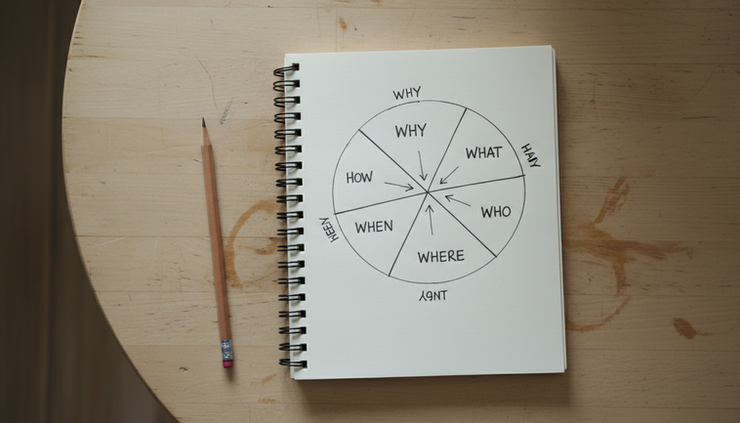
Why gives every decision a reason | Talk to AI
The question “Why?” is the foundation. It asks for the purpose behind the work. Without it, even a well-run project can deliver something that no longer matters.
A clear why answers questions like:
What problem are we trying to solve?
Why does this matter now?
What happens if we do nothing?
How will success serve people, operations, or long-term goals?
For example, a business might say, “We need a new customer intake process.” The why could be, “Customers wait too long for a response, and staff spend too much time sorting incomplete requests.” That reason points the team toward speed, accuracy, and customer experience, not just a new form.
A personal example works the same way. “I want to change careers” is a goal, but the why might be better income stability, more meaningful work, or a schedule that supports family needs. Each reason leads to different choices.
Practical application
Use the “because” test. Write the goal, then add “because.” If the sentence feels weak, keep asking why until the purpose becomes clear.
Example:
We are improving our internal reporting because managers need reliable information before making staffing and budget decisions.
That sentence is stronger than “We need better reports.” It gives the work a reason and gives the team a way to judge whether the result is useful.
How MLJ CONSULTANCY LLC can help
MLJ CONSULTANCY LLC can help clarify business goals before a project starts. That may include stakeholder interviews, problem definition, needs assessment, and plain-language goal statements. This early work reduces confusion later, especially when several departments or decision-makers are involved.
What defines the actual work
Once the why is clear, “What?” defines the thing being created, changed, studied, or decided. This question protects teams from scope creep, where a project grows beyond its original purpose.
The what should cover both the deliverable and the boundaries.
For a technology project, the what might be:
A secure online intake form
A staff training guide
A revised approval process
A dashboard showing request status
A policy for data access
It should also state what the project will not include. For example, the first phase may not include customer account creation or payment processing. Clear boundaries help teams avoid delays and budget pressure.
The Project Management Institute teaches that clear scope definition is central to project planning because it supports scheduling, cost control, and role assignment. Even without formal project language, the principle is practical: people work better when they know what they are building.
Practical application
Create a simple “what list” with three parts:
Question | Example answer |
What are we creating or changing? | A new customer intake process |
What must it include? | Required fields, response tracking, staff notifications |
What is out of scope for now? | Payment collection and customer account portals |
This small exercise prevents a common problem: people agreeing to a broad idea while imagining different final results.
How MLJ CONSULTANCY LLC can help | Talk to AI
MLJ CONSULTANCY LLC can turn broad goals into defined project requirements. Support may include scope documents, workflow maps, feature lists, process reviews, and project planning. For organizations exploring AI Video Voice Chat, Cybersecurity, Project Management, small businesses, medium-size businesses, large enterprises, ai consulting, ai solutions, or safe ways for customers to talk to AI, this question keeps the work grounded in actual needs.

Who identifies the people who matter | Talk to AI
“Who?” defines the people involved, affected, responsible, or needed for approval. It is easy to skip this question because teams often assume they already know the answer. That assumption creates problems.
A complete who list includes:
Decision-makers
Users
Customers or clients
Staff who will maintain the result
People affected by the change
Subject matter experts
Compliance, security, or finance reviewers when needed
For example, a company may build a new scheduling process for field staff. If only managers help design it, the process may look efficient on paper but fail in practice. Field staff know travel time, customer delays, weather issues, and supply constraints. Their input improves the design.
The who question also matters for equity and access. If a service affects older adults, rural users, people with disabilities, or nontechnical users, design choices should reflect those realities. Good planning includes the people who will live with the outcome.
Practical application
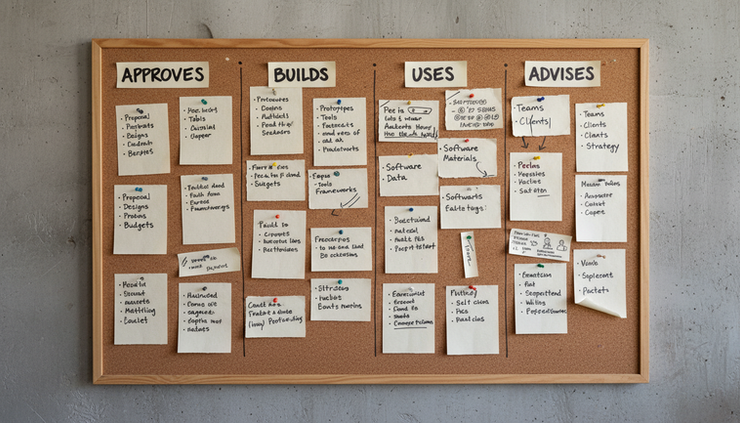
Use a responsibility chart with four plain categories:
Group | Role |
Approves | Makes the final decision |
Builds | Does the work |
Uses | Depends on the result |
Advises | Provides needed knowledge |
This avoids confusion between people who give input and people who make decisions. It also keeps projects from relying on one person’s memory.
How MLJ CONSULTANCY LLC can help | Talk to AI
MLJ CONSULTANCY LLC can help identify stakeholders, document roles, and guide communication planning. This is especially useful for projects involving policy changes, technology selection, cybersecurity readiness, process redesign, or multi-team coordination. Clear roles reduce rework and help people know when their input is needed.
How turns intention into a working plan | Talk to AI
“How?” explains the method. It turns goals into steps, tools, standards, and responsibilities.
This question should answer:
What process will we follow?
What resources do we need?
What skills are required?
What risks must we manage?
How will we test the work?
How will we measure progress?
For example, if an organization wants to improve data security, the how might include account access review, staff training, backup checks, incident response planning, and vendor risk review. The work becomes manageable because it breaks into specific actions.
The how question also supports quality. A team that says “We will train staff” still needs to explain how. Will training happen live, through recorded lessons, with written guidance, or through hands-on practice? Will new staff receive the same training later? Will completion be tracked?
Practical application
Use a basic method plan:
Define the current state.
Identify the gap between current and desired results.
Choose the steps needed to close the gap.
Assign owners for each step.
Test the result before full use.
Review results and adjust.
This method works for projects as different as launching a service, planning a home renovation, improving cybersecurity, or organizing a community event.
How MLJ CONSULTANCY LLC can help
MLJ CONSULTANCY LLC can help build practical project plans, process maps, implementation checklists, and risk controls. The goal is not to make planning complicated. The goal is to make work clear enough that people can carry it out and measure whether it succeeded.
When creates sequence and urgency | Talk to AI
“When?” places work in time. It covers deadlines, milestones, dependencies, review points, and the reason timing matters.
A weak timeline says, “Complete this soon.” A useful timeline says, “Complete intake design by March 15, test it with staff by March 29, and begin full use on April 8.” Specific dates create accountability and reveal conflicts early.
Timing also affects quality. Rushing a cybersecurity change without testing can create access problems. Waiting too long to modernize a manual process can increase labor costs and customer frustration. The when question helps balance speed with care.
Timing includes dependencies. A staff training session should not happen before the process is finished. A public launch should not happen before support staff know how to answer questions. A budget decision may need to happen before vendor selection.
Practical application
Build a timeline with three layers:
Milestones
The major points that show progress
Dependencies
Tasks that must happen before other tasks can begin
Decision dates
Moments when someone must approve, revise, or stop the work
For example, a small business updating its customer request process might set these milestones:
Date | Milestone |
03/01/2026 | Current process reviewed |
03/15/2026 | New workflow drafted |
03/29/2026 | Staff testing completed |
04/08/2026 | New process begins |
Dates should be realistic, but they should not be vague. Clear timing helps people plan their work and protects the project from drifting.
How MLJ CONSULTANCY LLC can help | Talk to AI
MLJ CONSULTANCY LLC can help create schedules, milestone plans, implementation calendars, and review checkpoints. This is useful for projects that must coordinate technology, training, risk control, and leadership approval across different teams or locations.
Where adds context that changes the answer | Talk to AI
“Where?” is about place, environment, channel, and context. The answer can change everything.
Where might mean:
A physical location
A website or app
A remote work setting
A customer service channel
A data storage location
A regulatory environment
A nationwide service area
For example, training that works well in person may not work for remote staff. A form that works on a laptop may be frustrating on a phone. A data process that works for one state may need review before it is used nationwide.
The where question also matters for security. Data location, device use, network access, and user permissions can all affect risk. A strong process in one setting may be weak in another.
Practical application
Ask where the work will be used, not just where it will be built.
For a service process, that may include:
Where customers first make contact
Where staff receive the request
Where data is stored
Where approvals happen
Where problems are reported
Where results are reviewed
This view catches gaps. A process may look complete until someone asks, “Where does the customer get confirmation?” or “Where does the record go after approval?”
How MLJ CONSULTANCY LLC can help
MLJ CONSULTANCY LLC serves clients nationwide and can help adapt plans to different locations, channels, teams, and technical settings. Support may include remote consultation, process review, technology planning, security guidance, and implementation support that fits the environment where the work will actually happen.

How the six questions work together
The six questions are most powerful when used together. Each one checks the others.
Question | What it clarifies | Risk if skipped |
Why | Purpose and value | Work may solve the wrong problem |
What | Scope and deliverables | The project may grow without control |
Who | Roles and affected people | Key voices may be missed |
How | Process and method | The plan may stay vague |
When | Timing and sequence | Deadlines may slip or conflict |
Where | Context and setting | The result may fail in real use |
A simple example shows the full framework in action.
Imagine an organization wants to improve customer support.
Why
Customers wait too long for answers.
What
The team will create a request tracking process and response guide.
Who
Customers, support staff, managers, and technical reviewers need input.
How
The team will map current requests, design a new process, test it, and train staff.
When
The pilot will run for four weeks before full use.
Where
Requests arrive online, by phone, and through field staff, so the process must support all three channels.
That is a stronger plan than “We need better support.” It gives the project focus, ownership, timing, and a real-world setting.
If this framework would help clarify a project, service, security review, or technology decision, review MLJ CONSULTANCY LLC service options.
FAQ | Talk to AI
Are the six essential questions only for business projects?
No. They work for personal goals, community planning, education, operations, technology projects, and major life decisions. The questions are simple, but they reveal gaps quickly.
Which question should come first?
Start with why. Purpose guides the rest. Once the reason is clear, move to what, who, how, when, and where.
Can this framework replace a full project plan?
No. It is a starting framework, not a full plan. For complex work, the answers should feed into a project charter, schedule, budget, risk review, and communication plan.
How often should teams revisit these questions?
Revisit them at major decision points, after new information appears, or when the schedule, budget, or scope changes. Strong plans stay aligned as conditions change.
How can MLJ CONSULTANCY LLC support the process?
MLJ CONSULTANCY LLC can help define goals, map processes, identify risks, plan implementation, guide technology decisions, and support teams as they move from questions to completed work.
Put the questions to work before the work begins | Talk to AI
The six essential questions are useful because they slow down the right part of a project: the beginning. A short pause to ask Why, What, Who, How, When, and Where can prevent weeks of confusion later.
Use the framework before starting a new project, changing a process, reviewing security, choosing a tool, or making a major decision. Write the answers down. Share them with the people involved. Update them when facts change.
Better outcomes rarely come from asking more complicated questions. They often come from asking the basic questions clearly, early, and honestly.


Comments