

MLJ Consultancy LLC Services for AI, HIPAA, Cybersecurity and Business Growth

A business can buy software quickly. Making that software useful, safe, compliant, and tied to real business goals is the harder part.
That is where MLJ Consultancy LLC fits. Its services sit at the point where artificial intelligence, security, health care compliance, operations, and project delivery meet. For many organizations, these areas no longer live in separate lanes. A patient intake tool may use AI, handle protected health information, affect billing, change staff workflows, and create new security risks. A customer support chatbot may need voice, video, data reports, staff training, and a clear rollout plan.
This post explains how MLJ Consultancy LLC services can support organizations across seven connected areas: Live multimodal AI support, AI use across industries, HIPAA compliance, cybersecurity, revenue cycle management, data analytics, and project management. The examples are anonymized and practical, showing the kinds of problems these services are designed to solve.

MLJ Consultancy LLC connects technology work to business results
Many technology projects fail for simple reasons. The tool may not match the workflow. The data may be messy. Staff may not trust the system. Security controls may come too late. Leaders may not know which result to measure.
MLJ Consultancy LLC helps address those gaps by combining advisory, planning, implementation support, and ongoing improvement. The work may include:
AI planning and support for chat, voice, image, and video-based tools
Safe AI use in health care, retail, education, service businesses, and other industries
HIPAA compliance planning for organizations that handle protected health information
Cybersecurity policies, staff training, and risk reduction
Revenue cycle management reviews for health care billing and payment workflows
Data analytics for planning, forecasting, and performance tracking
Project management practices that keep work on schedule and tied to clear goals
A practical roadmap may include an AI video voice chatbot, AI policy guidance, HIPAA readiness, revenue cycle management reviews, cybersecurity safeguards, project management planning, and data analytics reports. The value comes from making these parts work together.
For example, a health care practice that adds an AI intake assistant should not treat it as a stand-alone technology project. The practice also needs to ask:
What patient information will the tool collect?
Who can see that information?
How will the data move into the billing process?
What happens if the AI gives a confusing answer?
How will staff check quality?
What reports will show whether the tool helped?
That kind of cross-functional thinking reduces rework, lowers risk, and helps teams make better decisions.
Live multimodal AI support makes service faster and more accessible
Live multimodal AI support means assistance that can work across more than one input or output type. Instead of only reading typed text, the system may support voice, images, documents, video, or screen-based guidance.
For a new user, the easiest way to understand this is simple: people do not always communicate in one format. A patient may prefer speaking. A technician may need to show a broken part by video. A customer may upload a photo. A staff member may need a quick summary from a document.
MLJ Consultancy LLC can help organizations plan, test, and manage these forms of AI support so they solve real problems without creating new ones.
What live multimodal support can do
A well-designed AI support process can help with:
Answering common questions through chat or voice
Guiding users through forms or intake steps
Reading uploaded documents and extracting key information
Helping staff triage requests before human review
Supporting workers in the field with voice or image-based guidance
Creating summaries that save time during handoffs
The best use cases are narrow and measurable. For example, “help patients understand what to bring to an appointment” is easier to manage than “answer every medical question.” A focused use case also makes safety checks easier.
Case example of health care intake support
Consider an urgent care group that receives a high volume of routine calls about hours, insurance accepted, appointment timing, and forms. Staff spend a large part of the day repeating the same information. Patients wait on hold, and some arrive without needed paperwork.
A multimodal support tool can help by offering:
Voice answers for common questions
Text-based intake instructions
Form upload support
Simple routing to a human when the question is clinical, urgent, or unclear
The impact is practical. Front desk staff can focus on exceptions and patient care. Patients get basic information more quickly. Leaders can review call themes and update instructions when confusion appears.
For health care, the system also needs clear boundaries. It should not diagnose, replace a clinician, or expose protected health information to the wrong person. That is why AI planning and HIPAA requirements need to be handled together.
Case example of field service support
A nationwide service company may have technicians working in homes, warehouses, or outdoor sites. When a technician sees an unfamiliar piece of equipment, they may call a supervisor, send photos, or search through manuals.
A multimodal AI assistant can help identify the type of issue from a photo, read a maintenance guide, and walk the technician through approved steps. A human supervisor still handles safety-sensitive decisions. The AI supports faster lookup and clearer documentation.
The result is not magic. It is better access to instructions at the moment of need. That can reduce repeat visits, shorten repair time, and improve records for quality review.

AI applications work best when each industry starts with a clear problem
AI is not one service. It includes many methods that help systems classify information, summarize text, predict patterns, identify images, or respond to questions. Some uses are simple. Others require careful testing and oversight.
MLJ Consultancy LLC can help organizations choose use cases that match their risk level, data quality, and staff capacity. A small business does not need the same AI plan as a hospital system. A nonprofit may need help with donor records and reporting. A clinic may need policy review before using AI with patient information.
The table below shows examples of practical AI applications by industry.
Industry | Useful AI application | What success can look like |
Health care | Patient intake support, documentation summaries, billing work queues | Shorter phone queues, fewer missing forms, faster follow-up |
Retail and service businesses | Customer question routing, demand forecasting, inventory alerts | Better staffing decisions, fewer stock issues, quicker responses |
Manufacturing | Quality checks using images, maintenance guidance, safety documentation | Faster defect review, clearer maintenance records |
Education and training | Tutoring support, content summaries, student service triage | Faster answers for routine questions, more time for human support |
Finance and administration | Document review, invoice matching, policy search | Fewer manual checks, faster exception handling |
Nonprofits | Grant report support, volunteer scheduling, donor data summaries | Clearer reports, less manual data entry |
AI in health care needs tighter controls
Health care use cases carry higher risk because patient information is sensitive and decisions can affect care. A safe AI support plan should define:
What the AI is allowed to answer
What it must refuse or route to a person
How patient information is protected
How staff check for errors
How logs are reviewed without exposing private details
A medical office, for example, might use AI to summarize appointment preparation instructions. It should not let the system give personalized treatment advice unless a qualified clinician supervises that process under approved rules.
AI in operations should reduce friction, not add work
A distribution company might use AI to forecast demand by location. That can help plan staffing, delivery timing, and inventory levels. Yet the tool will only help if the data is current and if managers understand how to read the forecast.
MLJ Consultancy LLC can support this kind of project by helping define the business question first. A useful question might be, “Which locations are likely to run short next week?” That is clearer than, “How can we use AI?”
AI in customer support should include human backup
For service organizations, chat and voice tools can answer common questions. Still, the system must make it easy to reach a person when the issue involves billing disputes, safety, health, legal questions, or frustration.
A strong design includes:
Plain-language answers
Clear handoff rules
Testing with real customer questions
Quality review by staff
Reporting on unanswered or poorly answered questions
This is where consulting support matters. The technology is only one part. The workflow, review process, and staff adoption determine whether the tool helps.
HIPAA compliance protects patients and reduces business risk
HIPAA is the Health Insurance Portability and Accountability Act, a federal law that sets rules for protecting certain health information. It applies to many health plans, health care providers, and companies that handle protected health information on their behalf.
The U.S. Department of Health and Human Services explains HIPAA through several major rules, including privacy protections, security safeguards, and breach notification duties. In plain terms, organizations must limit who can access patient information, protect it from improper use, and respond correctly if information is exposed.
This section is informational only and is not legal advice.
Why HIPAA matters for AI and data projects
AI tools often depend on data. In health care, that data may include names, dates of birth, diagnoses, appointment notes, insurance details, or billing records. If an organization sends that information into a tool without proper safeguards, it can create serious privacy and compliance problems.
MLJ Consultancy LLC can help health care organizations think through questions such as:
Does the tool need patient information to work?
Can the task be done with less sensitive data?
Who can access the AI output?
Does a vendor need a written agreement to protect patient information?
How will staff know what they can and cannot enter?
What happens if information is sent to the wrong place?
The “minimum necessary” principle is a helpful guide. Staff should use only the information needed for the task. For example, a billing status report may need a claim number and service date, but not full clinical notes.
Case example of a behavioral health intake process
A behavioral health practice wants to reduce wait time for new patient intake. The original process relies on phone calls, emailed forms, and manual review. Staff sometimes store forms in inconsistent locations, which makes tracking difficult.
A safer process might include:
A secure intake form
Role-based access, so only approved staff can see sensitive information
A clear retention policy for uploaded documents
Staff training on what not to copy into AI tools
A review process for messages that mention self-harm, urgent symptoms, or medication questions
The operational benefit is clear. Staff can process intake packets more consistently. The compliance benefit is just as important. Sensitive information moves through approved channels, and the practice has a clearer record of what happened.

Cybersecurity best practices make daily work safer
Cybersecurity is the practice of protecting systems, accounts, devices, and data from misuse, theft, or damage. It matters for every industry, not only health care.
The National Institute of Standards and Technology, a U.S. federal agency, describes a common security approach in five plain steps: identify risks, protect systems, detect problems, respond to incidents, and recover operations. That structure is useful because it moves security beyond one-time fixes.
MLJ Consultancy LLC can help organizations build security practices that staff can follow. Overly complex rules often fail. Clear rules, simple training, and regular checks work better.
Practical security controls that reduce common risks
Strong cybersecurity starts with basics that many incidents exploit:
Use multi-step sign-in for important accounts. This means a password plus another proof, such as a code or prompt.
Give staff access only to the systems they need for their role.
Remove access quickly when someone leaves the organization.
Train staff to spot suspicious emails, payment requests, and fake login pages.
Keep systems updated, especially devices that store or access sensitive information.
Back up critical data and test whether backups can be restored.
Create a written incident response plan before a crisis occurs.
Review vendor access, especially when vendors can view customer, patient, or financial records.
Security training should use real examples. A staff member is more likely to remember “do not approve a payment change from an email alone” than a long policy paragraph.
Case example of a ransomware scare
A midsize clinic receives an email that appears to come from a known supplier. An employee clicks a link and reaches a fake sign-in page. Because the clinic uses multi-step sign-in, the attacker cannot access the account with only the password.
The clinic’s response plan guides the next steps:
The employee reports the issue quickly.
The password is changed.
Security logs are reviewed.
Similar emails are blocked.
Staff receive a short reminder with a screenshot of the warning signs.
No single control is perfect. The value comes from layers. Training helped the employee report the issue. Multi-step sign-in reduced account risk. Logging helped confirm what happened. A response plan kept the team from guessing under pressure.
For organizations using AI, cybersecurity also needs to cover AI-specific risks. Staff should know what information may be entered into AI tools, how outputs should be checked, and who approves new tools before use.
Revenue cycle management turns care into clean payment workflows
Revenue cycle management is the set of steps health care organizations use to get paid for services. It starts before the visit and continues through scheduling, insurance checks, coding, claim submission, payment posting, denial review, and patient billing.
When this process is weak, the effects are easy to see. Claims get denied. Staff spend time fixing preventable errors. Patients receive confusing bills. Leaders lack a clear view of cash flow.
MLJ Consultancy LLC can support revenue cycle management by reviewing workflows, identifying common denial causes, improving documentation habits, and connecting billing data to useful reports.
Key areas to review
A solid revenue cycle review often looks at:
Patient registration accuracy
Insurance eligibility checks
Prior approval requirements when needed
Medical coding consistency
Claim submission timing
Denial tracking by reason
Patient billing clarity
Payment posting and account follow-up
Staff roles and handoffs
Small errors early in the process can create large delays later. For example, an incorrect insurance number can lead to a denied claim. Missing documentation can delay payment. A service that needed prior approval may be rejected if the step was skipped.
Case example of a community clinic
A community clinic sees rising claim denials, but staff only review denials one claim at a time. Leaders know cash flow is tight, but they do not know which problems cause the most rework.
A revenue cycle assessment can group denials by reason. The findings might show patterns such as:
Eligibility information not checked close enough to the visit date
Missing referral details
Incorrect patient demographic information
Documentation gaps for certain services
Claims held too long before submission
Once patterns are visible, the clinic can fix the root causes. Staff may add a pre-visit eligibility check, update intake scripts, train on common documentation gaps, and create a weekly denial review. The goal is not just faster billing. The goal is fewer preventable mistakes.
Where AI can help the revenue cycle
AI can support revenue cycle work when used carefully. It may help sort denial reasons, summarize payer messages, flag missing fields, or identify accounts that need review. Human billing staff still need to verify outputs because billing rules can be complex and payer-specific.
The safest approach is to start with assistive tasks. For example, AI can group similar denial notes so staff can review trends faster. That is lower risk than letting a system submit claims without review.
Data analytics helps leaders see what is changing
Data analytics means turning raw information into useful measures, patterns, and decisions. It can include dashboards, trend reports, forecasts, and performance reviews. The purpose is not to create more charts. The purpose is to answer better questions.
For a growing organization, useful data answers questions such as:
Which services are increasing or decreasing?
Where are delays happening?
Which locations need more support?
Which customers or patients need follow-up?
Which work creates the most rework?
What changed after a new process launched?
MLJ Consultancy LLC can help organizations define measures, clean up data, build reports, and create a review rhythm so reports turn into decisions.
Good analytics starts with clean definitions
Many reporting problems are definition problems. One department may count a “completed request” when staff finish their part. Another may count it when the customer confirms resolution. Both teams may be honest, but the report will confuse leaders.
A clear data plan defines:
What each measure means
Where the data comes from
Who owns the data
How often it updates
What action leaders will take from the report
If no one will act on a measure, it may not belong on the dashboard.
Case example of a growing service business
A home services company has more bookings than in prior years but uneven profit by region. Leaders have sales reports, scheduling reports, and customer complaint logs, but the data lives in separate places.
A data analytics project can connect key measures without overcomplicating the work. The company may compare:
Jobs completed by region
Travel time
Repeat visits
Parts used
Customer follow-up
Average time from request to completion
The findings may show that one region has higher repeat visits because technicians lack a certain part on the first trip. That insight does not require a complex model. It requires connected data and a practical review process.
The business can then adjust stocking rules, update scheduling questions, and monitor whether repeat visits decline. That is how analytics supports growth. It links evidence to action.
Project management keeps complex work from drifting
AI, HIPAA, cybersecurity, billing, and analytics projects involve many people. Without clear project management, work can drift. Teams may debate scope, miss dependencies, overlook training, or launch before testing is complete.
Effective project management gives the work structure. It defines the goal, timeline, roles, risks, decisions, and measures of success.
MLJ Consultancy LLC can support projects from early planning through launch and improvement. This includes helping teams define what must happen, what can wait, and how to handle issues as they arise.
Techniques that keep projects on track
Useful project management does not need to be complicated. The strongest techniques are often simple:
Write a one-page project charter that states the goal, scope, owner, timeline, and expected result.
Break work into phases, such as discovery, design, testing, training, launch, and review.
Assign one clear owner for each task.
Track risks before they become delays.
Set decision rules so the project does not stall.
Test with real users before full launch.
Document what changed and why.
Review results after launch, not only during build.
A project plan should also include adoption. Staff need to know what will change, how to use the tool or process, and where to get help.
Case example of an AI support rollout
An organization wants to launch an AI support assistant for routine customer questions. The first draft of the project is too broad. It includes billing questions, service complaints, technical support, and policy interpretation.
A better project plan starts smaller:
Choose the top 25 routine questions.
Draft approved answers in plain language.
Define which questions must go to a person.
Test the assistant with staff before public use.
Review unanswered questions each week.
Update content based on real use.
Add new topics only after quality is stable.
This approach reduces risk and builds trust. Staff can see what the tool does. Leaders can measure whether it reduces repetitive work. Customers get faster answers for routine needs while still having access to human help.
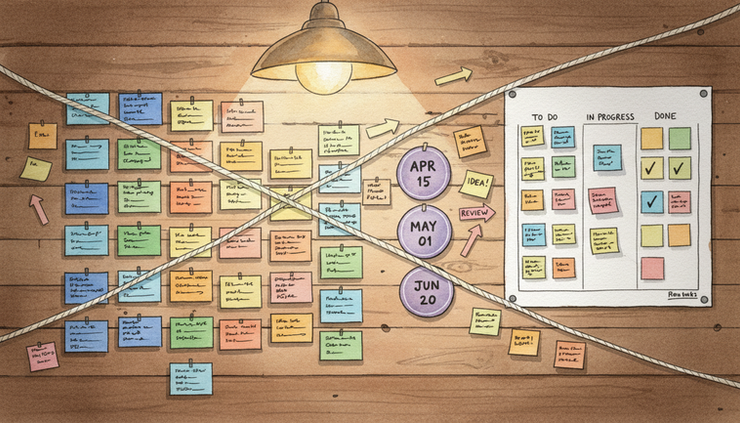
How these services work together in a real transformation
The strongest results often come when these services are combined. Consider a specialty medical practice that wants to grow while reducing staff overload.
The practice may start with several pain points:
Phone lines are crowded with routine questions.
Intake forms arrive incomplete.
Billing denials are increasing.
Leaders cannot see which services are most profitable.
Staff worry about privacy and security.
Past technology projects have taken too long.
A connected service plan could include:
Map the intake, scheduling, visit, billing, and follow-up workflow.
Identify common patient questions that AI can answer safely.
Review HIPAA needs before selecting or configuring tools.
Improve sign-in security and staff access controls.
Review denial trends and update front-end registration checks.
Build a simple dashboard for appointment volume, denials, and patient follow-up.
Manage the rollout in phases with staff testing and training.
The result is a more controlled change process. AI reduces routine burden. HIPAA and cybersecurity controls protect sensitive information. Revenue cycle work improves payment workflows. Data analytics shows what is working. Project management keeps the effort from becoming a loose collection of tasks.
That is the practical value of MLJ Consultancy LLC’s service mix. It helps organizations build systems that are useful, measurable, and safer to operate.
FAQ
What is live multimodal AI support?
Live multimodal AI support is AI assistance that can work with more than one type of input or output, such as text, voice, images, documents, or video. It is useful when people need help in different formats, such as speaking a question or uploading a file.
Why does HIPAA matter when using AI in health care?
HIPAA matters because AI tools may handle protected health information. Health care organizations need clear rules for what information can be used, who can access it, how it is protected, and when human review is required.
Can cybersecurity be improved without replacing every system?
Yes. Many risk reductions come from practical steps such as multi-step sign-in, staff training, access reviews, software updates, backup testing, and a written response plan. These controls can often improve safety before larger system changes happen.
How does revenue cycle management affect patient experience?
Revenue cycle issues can lead to delayed claims, confusing bills, and repeated requests for information. Cleaner registration, documentation, coding, and denial review can make billing more accurate and easier for patients to understand.
What makes a data analytics project useful?
A useful analytics project starts with clear questions, clean definitions, and reports tied to decisions. A dashboard only helps when leaders know what action to take from the information it shows.
A practical next step
Organizations do not need to solve AI, compliance, security, billing, analytics, and project delivery all at once. The first step is to identify the highest-risk or highest-friction workflow, then fix it with the right controls in place.
For organizations ready to compare service options, review MLJ Consultancy LLC’s available plans here: see MLJ Consultancy LLC pricing plans.
The best business technology work is practical. It protects sensitive information, supports staff, improves decisions, and creates a clear path from idea to measurable result. MLJ Consultancy LLC’s services are designed around that kind of work.


Comments