

How AI Is Transforming Everyday Life Across Healthcare Education and Finance

A person can get a fraud alert before a payment clears, draft a study plan in minutes, unlock a phone with their face, and receive a medical scan reviewed with software support. None of that feels like science fiction anymore. It feels ordinary.
That is the real impact of AI. It is not only a lab topic or a future issue. It already shapes daily choices, from how people learn and manage money to how doctors detect disease. The benefits are real, but so are the risks. The same technology that can flag a health problem earlier can also repeat bias, make opaque decisions, or expose sensitive data if people use it carelessly.
This article is informational only and does not replace medical, legal, financial, or technical advice.
AI has moved from the background into daily decisions
For years, machine learning systems worked mostly behind the scenes. They sorted email, ranked search results, recommended routes, and helped banks spot suspicious card activity. Newer tools have made the technology more visible because people can now ask questions, create text, summarize documents, and analyze information in plain language.
The broad shift is simple: computers are getting better at recognizing patterns and generating useful responses from large amounts of data. That does not mean they “think” like people. Most systems predict likely outputs based on training data, rules, and feedback. They can be very useful in narrow tasks, but they can also be confidently wrong.
This matters because many important systems now include some type of automated decision support. A hospital may use software to help read an image. A school may use a tool to give students practice questions. A lender may use a model to assess risk. In each case, the technology affects real people.
A helpful way to judge any tool is to ask three questions:
What decision does it influence?
What data does it use?
Who checks the result when the stakes are high?
Those questions matter most in healthcare, education, and finance.
Healthcare is using algorithms to support faster and more precise care
Healthcare has some of the clearest examples of useful AI applications. Medical work produces large amounts of structured and unstructured data, including images, lab results, clinician notes, device readings, and patient histories. Pattern-recognition tools can help clinicians review that information faster.
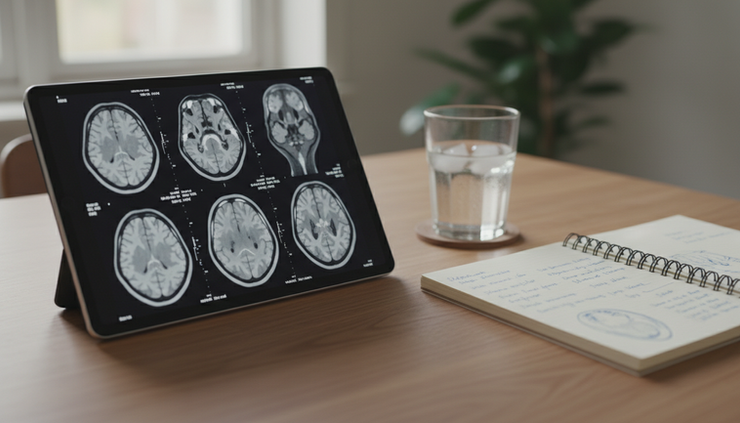
The U.S. Food and Drug Administration maintains a public list of authorized medical devices that use artificial intelligence or machine learning. Many relate to radiology, where software can assist with image review. These tools do not replace physicians. They support them by flagging areas that may need closer attention.
Common healthcare uses include:
Reviewing medical images for signs of disease
Predicting which patients may be at higher risk for complications
Summarizing clinical notes to reduce documentation burden
Helping schedule appointments and answer basic patient questions
Supporting hospital operations, including staffing and billing workflows
One practical example is diabetic eye screening. Image-analysis tools can help detect signs of diabetic retinopathy, a condition that can lead to vision loss if left untreated. Used correctly, this kind of tool may help expand access to screening, especially in areas with fewer specialists.
Another example appears in hospital administration. Revenue cycle management teams handle coding, claims, denials, and payments. Automated systems can help find missing information in claims or identify patterns that cause delays. That can reduce wasted time, but it also raises accountability questions. A billing error can affect a patient’s cost, credit, or access to care.
Healthcare benefits are easy to see:
Faster review of routine data
Earlier warning signs for some conditions
Less repetitive paperwork for clinicians
More personalized patient follow-up
Better use of limited staff time
The challenges are just as important. Medical data is highly sensitive. Models trained on incomplete or biased data may perform worse for some groups. A tool may also work well in one hospital but poorly in another if patient populations, equipment, or workflows differ.
The World Health Organization has warned that health-related systems should be designed with transparency, privacy, safety, and human oversight in mind.
That warning is practical, not abstract. In healthcare, a wrong suggestion can lead to missed care, unnecessary testing, or loss of trust. The safest use is usually a partnership: software helps surface information, and trained clinicians make the final judgment.
Education is becoming more personalized, but not automatically more fair
Education has always depended on feedback. Students learn better when they know what they misunderstand, practice at the right level, and get support before they fall far behind. AI can help with those tasks.
In classrooms and at home, tools can now generate practice quizzes, explain math steps, translate text, summarize readings, or adapt lessons based on a student’s answers. For adult learners, the same technology can create study guides, role-play interviews, or help explain technical topics in plain language.
Used well, these tools can support:
Students who need extra practice
Teachers who need help creating materials
Learners with disabilities who benefit from speech-to-text, captions, or reading support
Families who need translation or homework explanations
Workers learning new skills outside a formal classroom
For example, a student struggling with fractions can get several explanations at different levels. One explanation might use pizza slices. Another might use a number line. A teacher can then review where the student got stuck rather than spending the whole period creating new worksheets.
There is also strong potential for accessibility. Speech recognition can help students dictate ideas. Text-to-speech can support students with reading challenges. Translation tools can help families understand school messages, although human review matters for sensitive topics.
The risks start when schools treat automated output as neutral or complete. A writing tool may generate a polished answer without real understanding. A grading tool may miss creativity or penalize language patterns connected to a student’s background. A tutoring tool may give a wrong explanation that sounds convincing.
Academic integrity is another concern. If students use tools to produce work they do not understand, grades lose meaning. But banning every tool can also miss the point. Many workplaces already use automation for drafting, research, and planning. Schools need to teach responsible use, not only detection.
The better path is clear policy and better assignments. Students can be asked to show drafts, explain their reasoning, cite sources, and reflect on where technology helped. Teachers still matter because learning is social, emotional, and contextual. A tool can explain a concept, but it does not know a student’s full story the way a strong educator can.

Finance is using automation to detect risk, speed decisions, and personalize services
Finance has used statistical models for decades. What has changed is the scale, speed, and variety of data that systems can process. Banks, credit unions, insurers, payment processors, and financial apps use automated tools to detect fraud, review documents, assess risk, and respond to customers.
Fraud detection is one of the most familiar examples. If a card is suddenly used in an unusual location or for an unusual purchase pattern, a system may flag it. This can protect consumers and financial institutions. The benefit is speed. Suspicious activity can be identified in seconds rather than days.
Credit and lending decisions are more sensitive. Automated models may help assess whether a borrower can repay a loan, but those decisions must follow fair lending laws. In the United States, lenders cannot discriminate based on protected characteristics. Regulators have also stressed that consumers deserve clear reasons when credit is denied.
Common finance uses include:
Spotting unusual transactions
Reviewing loan documents
Estimating credit risk
Detecting money laundering patterns
Answering basic service questions
Helping people categorize spending and plan budgets
Personal finance tools can also help households understand where money goes. A budgeting app may group transactions, identify recurring bills, and remind someone before a payment is due. That can support better habits, although people should still check for errors.
The main concern in finance is that automated decisions can be hard to explain. If a model recommends denying a loan, raising a premium, or freezing a transaction, people need a way to challenge mistakes. Data quality matters too. Incorrect records can lead to unfair outcomes.
Security is another major issue. Financial data is a high-value target. The same risk lens applies to Cybersecurity, revenue cycle management, project management, ai solutions, and ai consulting, where automation can help or harm depending on how people govern access, monitor errors, and review outputs.
A useful finance system should do more than make a prediction. It should keep records, allow review, protect data, and give people a path to correct problems.
The biggest benefits come with clear limits
Across industries, the benefits tend to fall into a few categories.
Benefit | Everyday example | Why it matters |
Faster pattern recognition | Flagging a suspicious payment | People can respond sooner |
More personalized support | Adjusting practice questions for a student | Help can match current needs |
Less repetitive work | Summarizing routine notes | Staff can spend more time on judgment |
Better access | Screening tools in underserved areas | Specialized support may reach more people |
Earlier warnings | Identifying risk signals in patient data | Prevention can improve outcomes |
The pattern is consistent. The technology works best when the task is narrow, the data is relevant, and the result is checked by a person when the stakes are high.
It works poorly when people expect it to replace judgment, ethics, or accountability.
The challenges are not only technical
Many public debates focus on whether automated tools are “smart enough.” That is only one part of the issue. The harder questions involve power, privacy, fairness, and trust.
Bias can enter through data. If historical data reflects unequal access, unequal treatment, or past discrimination, a model can repeat those patterns.
Privacy can weaken when data spreads. Healthcare records, student work, and financial activity reveal intimate details. Strong permission rules and data limits matter.
Errors can look authoritative. Generated answers may sound polished even when they are false. This is risky in health, education, and money decisions.
Accountability can become unclear. If a software tool suggests a decision, who is responsible when it harms someone? The vendor, the organization, the operator, or all of them?
Skills can fade. When people rely too heavily on automated suggestions, they may practice less judgment themselves. This is a concern for students, professionals, and organizations.
The National Institute of Standards and Technology has published an AI Risk Management Framework that focuses on mapping, measuring, managing, and governing risks. The key idea is simple: responsible use requires more than buying a tool. It requires ongoing testing, clear roles, and review.
How to think critically about the future
The future will not be a simple story of humans versus machines. The more likely future is mixed. Some tasks will become easier. Some jobs will change. Some risks will grow. Some people will benefit sooner than others.
A practical approach is to judge each use case, not the technology as a whole.
Ask these questions before trusting a system:
What problem is it trying to solve?
Is the data accurate and relevant?
Could the result affect health, money, education, or rights?
Can a person review or appeal the decision?
How does the system protect private information?
Has it been tested with different populations and real-world conditions?
What happens when it is wrong?
These questions help cut through hype and fear. They also point to better design. The goal should be useful tools that increase human capability without hiding responsibility.
For organizations that need help evaluating practical use cases, pricing, and advisory support, review the available AI consulting plan.
FAQ
How is AI already used in everyday life?
It appears in fraud alerts, maps, spam filters, voice assistants, medical scheduling, translation tools, recommendation systems, and learning apps. Many people use it without noticing because it runs in the background.
Can AI replace doctors, teachers, or financial advisors?
It can support parts of their work, but it should not replace human judgment in high-stakes decisions. Healthcare, education, and finance all require context, ethics, and accountability.
What is the biggest risk of AI in daily life?
One major risk is overtrust. Systems can make mistakes, repeat bias, or give incomplete answers. People need clear ways to review, question, and correct automated decisions.
How can individuals use AI more responsibly?
Check important answers against reliable sources, avoid sharing sensitive personal information unless necessary, and treat automated output as a starting point rather than final truth.

A better future depends on better choices now
AI is already changing healthcare, education, and finance in practical ways. It can help detect disease, support learning, catch fraud, and reduce repetitive work. Those are meaningful gains.
The next step is not blind adoption or blanket rejection. The better path is careful use: protect data, test for bias, explain decisions, keep humans responsible, and match the tool to the task. The future will be shaped less by what the technology can do in theory and more by the standards people set for using it in real life.


Comments