

Free HIPAA Compliance Training with Live Multimodal AI and Certificate of Completion

A single privacy mistake can harm a patient, disrupt a healthcare team, and trigger a formal complaint. That is why HIPAA training is not just a yearly checkbox. It is part of safe, respectful care.
HIPAA, the Health Insurance Portability and Accountability Act, sets national standards for protecting patient health information in the United States. For healthcare professionals, it affects daily work: intake forms, appointment reminders, test results, phone calls, billing details, access to records, and even hallway conversations.
MLJ CONSULTANCY LLC is offering a limited-time opportunity to complete free HIPAA compliance training through a live multimodal AI format, with a certificate of completion. The training is designed to help healthcare workers understand privacy rules, practice real situations, and receive feedback while the lesson is still fresh.
This article is informational only and does not replace legal advice. For specific compliance decisions, organizations should follow their policies and consult qualified compliance or legal support.

What HIPAA compliance means in daily healthcare work | Free HIPAA Compliance Training with Live Multimodal AI and Certificate of Completion
HIPAA became federal law in 1996. While the law covers several areas, most healthcare professionals know it for one central purpose: protecting patient health information.
The U.S. Department of Health and Human Services explains HIPAA through several key rules, including the Privacy Rule, the Security Rule, and the Breach Notification Rule. In plain language, these rules guide how covered healthcare organizations and their partners handle patient information.
HIPAA compliance touches three practical questions:
Who is allowed to see patient information?
When can that information be used or shared?
How should it be protected from improper access or disclosure?
Patient information includes more than diagnosis notes. It can include a name, address, birth date, medical record number, lab result, insurance detail, billing record, appointment time, or any health detail that can identify a person. This is often called protected health information.
HIPAA matters because healthcare depends on trust. Patients share private details because they believe care teams will protect them. When that trust breaks, patients may hesitate to disclose symptoms, avoid follow-up care, or fear judgment.
HIPAA also matters because mistakes can carry real consequences. The Office for Civil Rights within the U.S. Department of Health and Human Services investigates HIPAA complaints and can require corrective action. Depending on the situation, organizations may face penalties, monitoring, policy changes, staff retraining, or reputational damage.
For individual professionals, HIPAA knowledge supports safer decisions at work. Examples include:
Confirming identity before discussing a record
Avoiding patient details in public areas
Sending information only through approved channels
Opening records only when job duties require it
Reporting suspected privacy incidents quickly
Understanding what to do when a patient asks for access to their record
HIPAA compliance is not about memorizing legal language. It is about building habits that protect real people.
Why HIPAA training is critical for healthcare professionals | Free HIPAA Compliance Training with Live Multimodal AI and Certificate of Completion
Healthcare privacy risks often come from routine moments, not dramatic events.
A receptionist may leave a form where another patient can see it. A staff member may discuss a patient in an elevator. A clinician may open the wrong record. A billing worker may send information to an outdated address. A new employee may not know that family members cannot automatically receive details without proper permission.
These examples are common because healthcare is busy. People move quickly. Information changes hands often. Teams include full-time staff, part-time workers, contractors, students, volunteers, and vendors. In that setting, clear training reduces confusion.
Good HIPAA training helps healthcare workers understand both the rule and the reason behind it. That makes it easier to respond when a situation does not match a script.
For example, consider a patient’s relative calling to ask for test results. A person who only memorized “do not share information” may simply refuse. A better-trained person knows to verify authorization, follow the organization’s process, document the request when needed, and protect the patient’s rights while still treating the caller respectfully.
Training also helps professionals spot small risks before they grow. A locked screen, a careful handoff, a lower voice at the nurses’ station, or a secure message can prevent a larger problem.
For healthcare organizations, repeated training supports a culture of compliance. Staff members hear the same privacy expectations, use shared language, and understand where to report concerns. This helps managers address gaps before they become formal complaints.
For workers building a healthcare career, HIPAA knowledge signals reliability. Employers generally expect staff to understand patient privacy before handling records or interacting with patients. A certificate of completion can help show that a person took the topic seriously and completed structured training.
Why a live multimodal AI format changes the learning experience | Free HIPAA Compliance Training with Live Multimodal AI and Certificate of Completion
Many people have experienced dry compliance training. A slide appears. A paragraph fills the screen. A quiz asks a basic question. The learner clicks through, passes, and forgets most of it by the next week.
That style may satisfy a minimum requirement, but it does not always prepare people for real privacy decisions.
The Free HIPAA compliance training offered by MLJ CONSULTANCY LLC's Live Multimodal AI takes a more active approach. “Multimodal” means the training can use more than one form of learning support, such as text, voice, visual prompts, scenarios, and guided interaction. “Live” means the learner can engage with the training in the moment instead of passively reading static material.
This format matters because HIPAA decisions often require judgment. The right answer may depend on role, setting, patient permission, and organizational policy.
A live multimodal AI approach can help learners practice those judgments in a safer setting.
Interactivity helps learners stay engaged
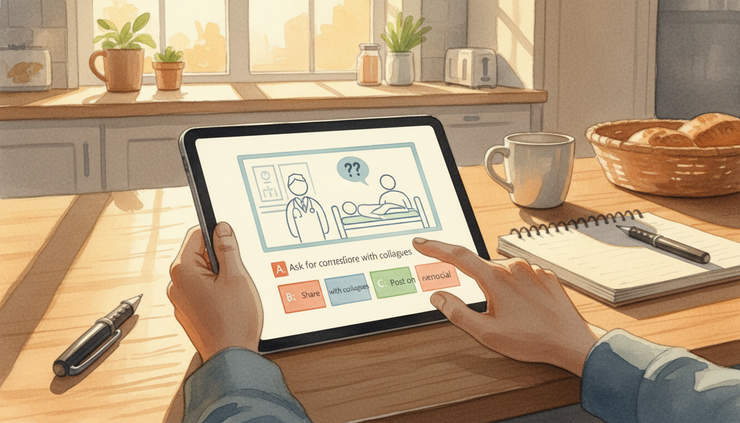
Interactive training asks learners to participate. Instead of only reading a rule, the learner may respond to a situation.
For example:
A patient is waiting at the front desk. Another patient is standing close behind them. The first patient asks about a bill. What should the staff member do?
A passive course might state, “Protect patient information in public spaces.” An interactive course can ask the learner to choose a response, then explain why one answer better protects privacy.
That kind of practice changes the learning experience. It encourages attention, memory, and decision-making.
Interactivity can also help people learn at different experience levels. A new healthcare worker may need basic explanations. A seasoned professional may benefit from complex examples, such as records access, minimum necessary use, or patient authorization. A flexible learning format can meet both learners closer to where they are.
Real-time feedback corrects mistakes before they become habits
Feedback is strongest when it arrives close to the action. If a learner answers a scenario incorrectly and receives a clear explanation right away, the lesson is easier to remember.
Real-time feedback can explain:
Why an answer may expose information
Which part of the rule applies
What a safer response looks like
How the scenario may change in a different role or setting
When to ask a supervisor or privacy officer
For example, a learner might think it is acceptable to look up a neighbor’s record out of concern. The training can explain that curiosity or personal concern does not create a work-related need to access the record. That reminder is practical, direct, and easy to connect to real life.
This kind of feedback also supports confidence. HIPAA can feel intimidating because mistakes are serious. Clear practice helps learners build good instincts without fear.
What learners can expect from the training | Free HIPAA Compliance Training with Live Multimodal AI and Certificate of Completion
A useful HIPAA course should connect law, policy, and daily behavior. While each training experience may vary, strong HIPAA education usually covers several core areas.
Patient information and privacy basics
Learners should understand what counts as protected patient information and why it must be handled with care. This includes obvious details, such as diagnoses and test results, plus less obvious details, such as appointment dates or billing information.
The training should make clear that patient information can appear in many places:
Paper forms
Electronic records
Phone conversations
Text messages
Email
Faxed documents
Verbal handoffs
Printed schedules
Billing systems
The core habit is simple: treat identifiable patient information as private unless a proper reason and process allow its use or disclosure.
The minimum necessary standard
One widely taught HIPAA concept is the “minimum necessary” standard. In plain language, this means using or sharing only the patient information needed to complete the task.
A billing worker may need insurance details but not full clinical notes. A scheduler may need appointment information but not a full diagnosis history. A care team member may need more detailed information because treatment requires it.
Training helps workers think carefully before opening, discussing, printing, or sending details.
Patient rights
HIPAA gives patients certain rights over their health information. For example, patients generally have the right to access their health records and request corrections when they believe information is inaccurate.
Frontline workers may not process every request themselves, but they should know how to direct patients to the right process. A dismissive answer can frustrate patients and create risk. A trained response supports both compliance and patient trust.
Safe communication
Healthcare work depends on communication, but not every communication method is appropriate for patient information.
Training can help learners understand why organizations set rules for email, portal messages, phone verification, voicemail, texting, and printed documents. The safest choice is usually the organization’s approved method, not the fastest personal method.
A common example is appointment reminders. A reminder may seem harmless, but it can still reveal that a person receives care at a specific place. HIPAA training helps staff understand how to follow internal procedures and avoid unnecessary detail.
Breach awareness and reporting
A privacy breach means patient information may have been accessed, used, or disclosed in a way not allowed by HIPAA. Not every incident has the same level of risk, but staff should report concerns quickly.
Training should make reporting feel normal, not shameful. Early reporting gives an organization more time to respond, reduce harm, and meet notification duties when they apply.
Examples that should raise concern include:
Sending patient information to the wrong recipient
Losing paperwork that contains patient details
Clicking on a suspicious message that may expose access
Viewing a record without a work-related reason
Discussing patient information where others can hear
The goal is not blame. The goal is protection.
Why free access matters for professional development | Free HIPAA Compliance Training with Live Multimodal AI and Certificate of Completion
Cost can be a barrier to training, especially for students, job seekers, small practice staff, contract workers, and professionals returning to the field. A free option removes one of the most common obstacles.
Free HIPAA Training can be especially helpful for people who want to strengthen a resume, prepare for a healthcare role, or refresh their knowledge before starting a new assignment.
For employers and supervisors, accessible training can also support onboarding. While organizations still need to follow their own policies and document required training as appropriate, free education can help workers arrive with a stronger foundation.
For individuals, the value is practical. HIPAA knowledge appears in many healthcare settings, including:
Medical offices
Dental practices
Behavioral health settings
Pharmacies
Home health services
Hospitals
Billing and coding roles
Scheduling and intake roles
Patient support roles
Health administration programs
Even roles that do not involve direct care may involve patient information. A person who answers phones, processes claims, scans documents, or supports records requests needs privacy awareness.
Free training also supports career mobility. Healthcare workers often move between departments, settings, or specialties. A strong privacy foundation travels with them.
The certificate of completion adds professional value | Free HIPAA Compliance Training with Live Multimodal AI and Certificate of Completion
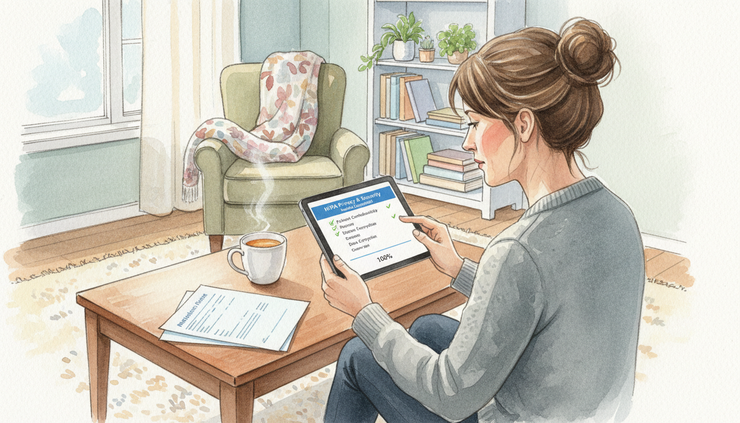
A certificate of completion is more than a file to save. It can serve as proof that a learner completed a structured HIPAA training experience.
That proof can be useful in several professional situations.
It can support job applications
Many healthcare job postings mention privacy, confidentiality, or HIPAA knowledge. A certificate does not guarantee a job, but it can help show preparation.
For example, an applicant for a front desk role can mention HIPAA training when discussing how they would protect patient information during check-in. A billing candidate can connect training to careful handling of claims and records. A student seeking clinical placement can show that they understand the seriousness of patient privacy before entering a care setting.
It can strengthen onboarding conversations
New employees often receive organization-specific HIPAA training after hire. A prior certificate can make that training easier to understand because the learner already knows the basic concepts.
The certificate may also help managers see that the person has taken initiative. In healthcare, initiative matters most when it connects to safety, accuracy, and respect for patients.
It can document continuing growth
Healthcare changes over time. Roles change. Tools change. Patient expectations change. Regular education helps professionals keep privacy in view instead of treating it as a one-time requirement.
A certificate can be stored with other professional records, such as licenses, continuing education documents, school records, or onboarding materials. Learners should keep a copy for their files and confirm whether an employer accepts it for any specific requirement.
It can improve confidence
Professional value is not only external. Confidence matters.
Workers who understand HIPAA are more likely to pause before sharing information, ask better questions, and report concerns sooner. They are also better prepared to explain privacy practices to patients in a calm, respectful way.
That confidence can improve daily work. It reduces guesswork.
How live AI feedback can make privacy rules easier to remember | Free HIPAA Compliance Training with Live Multimodal AI and Certificate of Completion
HIPAA contains legal rules, but people remember examples. That is where live scenario-based learning can help.
Consider these practical situations:
Common situation | Risk if handled poorly | Better habit |
A patient asks a question at a crowded check-in area | Others may hear private details | Move the conversation to a more private space or lower the amount of information shared |
A worker prints a schedule and leaves it unattended | Patient names and appointment details may be visible | Keep printed materials secured and dispose of them properly |
A staff member opens a familiar patient’s record out of curiosity | Access may violate privacy rules and employer policy | Open records only for work-related duties |
A caller asks for a patient’s results | Information may go to someone without permission | Follow identity and authorization procedures |
A message includes more patient detail than needed | Unnecessary information may be exposed | Use the least amount of information needed for the task |
In a static course, these examples may be easy to skim. In a live multimodal AI format, learners can interact with scenarios, test their choices, and receive an explanation.
That matters because privacy decisions often happen under time pressure. If the first time a person thinks through a situation is during an actual incident, the risk is higher. Practice gives the brain a safer pattern to follow.
A strong training format also helps with different learning styles. Some people learn best by reading. Others need examples, visuals, spoken explanation, or practice questions. A multimodal format can combine these elements so the lesson is clearer.
The result is better retention, not just course completion.
Why the limited-time offer deserves attention now | Free HIPAA Compliance Training with Live Multimodal AI and Certificate of Completion
Limited-time free training creates a clear opportunity. When a course has no cost barrier and includes a certificate, delaying can mean missing a practical professional benefit.
There is also a compliance reason to act sooner. Privacy knowledge is most valuable before a mistake happens.
A healthcare worker may not know when they will face a difficult privacy question. It could happen during the next shift, the next phone call, or the next patient interaction. Training today can improve tomorrow’s decision.
Acting now can be especially useful for:
People applying for healthcare jobs
Students preparing for clinical or administrative roles
Staff members who have not taken HIPAA training recently
Workers moving into roles with more access to patient information
Small healthcare teams that need accessible training options
Professionals returning after time away from healthcare
The limited-time nature of the offer also helps overcome a common problem: good intentions without follow-through. Many people plan to refresh compliance knowledge “soon.” A free training window gives that plan a clear deadline.
How to get the most value from the training | Free HIPAA Compliance Training with Live Multimodal AI and Certificate of Completion
Completing the course is useful. Engaging with it carefully is better.
A few practical habits can make the experience more valuable.
Take notes on real work situations
While learning, write down situations that match daily work. Examples might include patient check-in, telephone requests, shared workstations, printed records, or conversations with family members.
Connecting lessons to real tasks improves memory.
Ask “what would I do next?”
HIPAA training is strongest when it leads to action. For each scenario, think through the next step.
Would the situation require verifying identity? Moving to a private space? Asking a supervisor? Reporting a concern? Using an approved system?
This turns general knowledge into workplace behavior.
Save the certificate in more than one place
After completing the training, save the certificate where it can be found later. Keep a digital copy and, if helpful, a printed copy with other professional documents.
If an employer asks for proof of training, having the certificate ready avoids delay.
Revisit policies at work
HIPAA sets national standards, but each organization has its own procedures. Training gives the foundation. Workplace policies explain exactly how to apply that foundation in a specific setting.
For example, one organization may have a specific process for voicemail messages. Another may use a different process for patient portal communication. The safest approach is to combine HIPAA knowledge with local policy.

Frequently asked questions | Free HIPAA Compliance Training with Live Multimodal AI and Certificate of Completion
Who should take HIPAA compliance training?
Anyone who works with patient information should understand HIPAA basics. This includes clinical staff, administrative staff, billing teams, students, volunteers, contractors, and support workers in healthcare settings.
Does a certificate of completion replace an employer’s required training?
Not always. Employers may require their own HIPAA training based on internal policies and job duties. A certificate can still show preparation, but workers should confirm what their organization accepts.
What makes live multimodal AI training different from a standard online course?
A standard course often presents static reading material and a quiz. A live multimodal AI format can include interaction, scenarios, visual or text-based learning support, and real-time feedback that helps explain why an answer is right or wrong.
Is HIPAA only about electronic medical records?
No. HIPAA applies to many forms of patient information, including paper records, verbal conversations, billing details, appointment information, and electronic records.
Why act now if the training is free?
The free offer is available for a limited time, and privacy knowledge is most useful before a mistake occurs. Completing training now can support compliance, confidence, and career readiness.
Make HIPAA knowledge part of your professional foundation | Free HIPAA Compliance Training with Live Multimodal AI and Certificate of Completion
HIPAA compliance is one of the clearest ways healthcare professionals protect patient dignity. Every secure message, private conversation, careful record access, and timely report helps maintain trust.
MLJ CONSULTANCY LLC’s live multimodal AI training offers a timely way to strengthen that foundation. The format supports active learning, the real-time feedback helps correct misunderstandings, and the certificate of completion gives learners a useful record of professional development.
Take the opportunity while it is available. Start the free training and earn your certificate through MLJ CONSULTANCY LLC’s HIPAA compliance training page.
A strong healthcare career is built on skill, judgment, and trust. HIPAA training supports all three.


Comments