

Empowering Strategies to Cope with a Toxic Workplace and Prioritize Your Well-Being

Hating your job can drain your energy, cloud your mind, and weigh heavily on your emotions. When the workplace feels toxic, it’s not just about disliking tasks or colleagues; it’s about protecting your mental health and sense of self. Recognizing the emotional toll and taking steps to prioritize your well-being can make a significant difference. This post offers practical strategies to survive a toxic environment now and plan a realistic exit for a healthier future.

Understanding the Emotional Toll of a Toxic Workplace
Working in a toxic environment often leads to feelings of anxiety, frustration, and helplessness. You might experience:
Constant stress that affects sleep and mood
Loss of motivation and self-confidence
Physical symptoms like headaches or fatigue
Strained relationships outside work due to emotional exhaustion
These effects can build up over time, making it harder to focus or find joy in daily life. Acknowledging these feelings is the first step toward change. Your well-being matters more than any job.
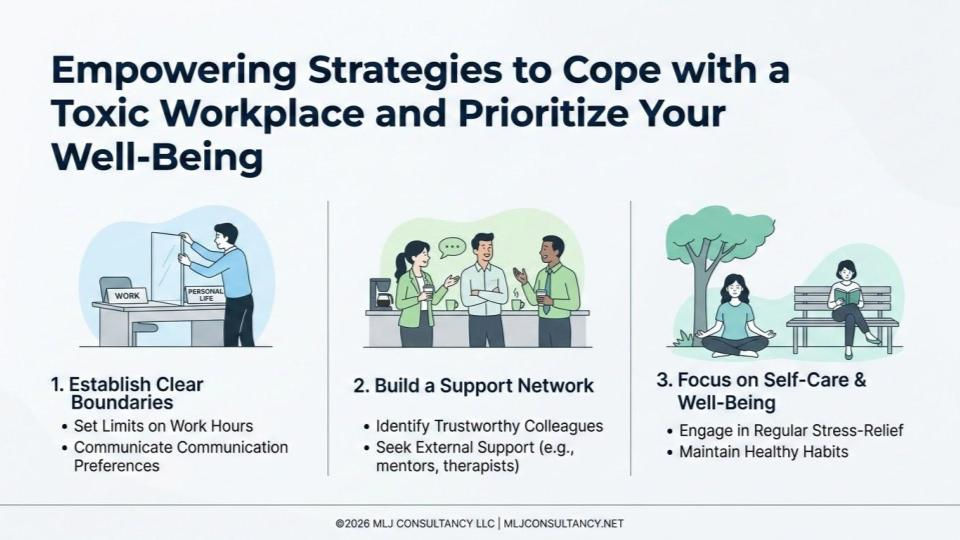
Immediate Survival Strategies to Protect Your Well-Being
While planning your next move, you need ways to cope daily. Here are some effective strategies:
Physically Detach During Breaks to Recharge
Use your breaks to step away completely from work tasks and environment. This might mean:
Taking a short walk outside to breathe fresh air
Sitting quietly in a calm space without screens or work thoughts
Practicing deep breathing or mindfulness exercises
Physical detachment helps reset your mind and reduces stress buildup.
Find Meaning or Mastery in Enjoyable Tasks
Even in a toxic workplace, there may be tasks you find satisfying or that challenge your skills. Focus on these to:
Build confidence and a sense of accomplishment
Shift attention away from negativity
Keep your skills sharp for future opportunities
For example, if you enjoy organizing projects or helping colleagues, lean into those parts of your job.
Protect Your Identity Outside of Work
Your job does not define your worth. Maintain hobbies, friendships, and activities that remind you who you are beyond your role. This separation helps:
Preserve your self-esteem
Provide emotional support
Offer a mental break from work stress
Make time for things you love, whether it’s sports, art, reading, or volunteering.
Manage Upward by Setting Boundaries with Toxic Bosses
Dealing with difficult supervisors requires clear boundaries to protect your mental space:
Politely but firmly say no to unreasonable demands
Limit communication to work hours when possible
Document interactions if you face unfair treatment
Setting limits can reduce burnout and give you a sense of control.
Crafting a Realistic Exit Strategy from a Toxic Workplace
Leaving a toxic job is often the best choice for long-term health, but it requires planning. Follow these steps:
Assess the Root Causes of Workplace Distress
Identify what makes your environment toxic. Is it:
Poor management or leadership style?
Unfair policies or workload?
Negative coworkers or bullying?
Understanding the source helps you decide if changing teams, roles, or companies is necessary.
Set Milestones for a Career Transition
Break your exit plan into manageable goals, such as:
Updating your resume and LinkedIn profile
Networking with industry contacts
Applying to a set number of jobs each week
Gaining new skills or certifications
Clear milestones keep you motivated and track progress.
Financial Planning to Support a Smooth Departure
Money worries often delay leaving a toxic job. Prepare by:
Building an emergency fund covering 3 to 6 months of expenses
Reducing unnecessary spending
Exploring side income options if possible
Having financial security gives you freedom to leave without immediate pressure.


Comments