

Autonomous AI Agents Multimodal Innovation and Enterprise Adoption Transforming Science and Medicine

Autonomous AI Agents Multimodal Innovation and Enterprise Adoption Transforming Science and Medicine | Artificial intelligence is moving from answering questions to taking action. That is the biggest practical shift behind many of the latest changes in the field. Tools that once produced a paragraph, an image, or a short summary can now plan a task, use information from several sources, check their own work, and hand off a result that people can use.
That shift matters because artificial intelligence is no longer limited to technical teams. A home user can ask a tool to compare insurance options or summarize a medical bill. A small business can use it to sort customer messages, draft a budget forecast, or create training materials. A research lab can use it to read images, scan records, and flag patterns that deserve closer review.
The question, what's trending in AI right now?, has a clear answer: more independent tools, richer input types, broader business use, and faster progress in science and medicine. The details are where the story gets useful.
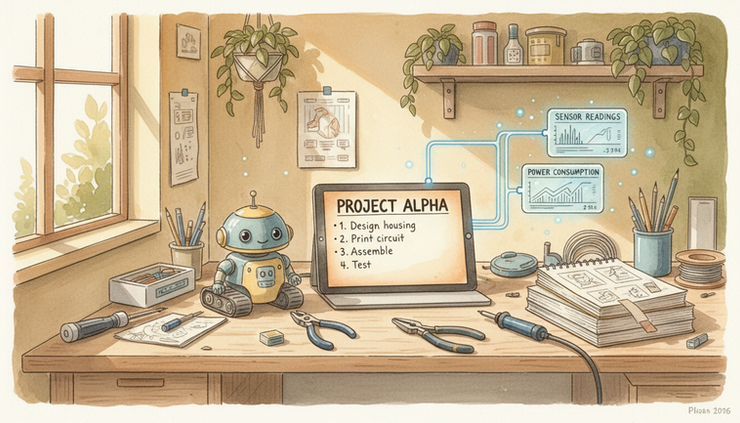
Autonomous AI agents are moving from chat to task completion | Autonomous AI Agents Multimodal Innovation and Enterprise Adoption Transforming Science and Medicine
The first wave of generative artificial intelligence was mostly conversational. A person typed a prompt, received an answer, and then decided what to do next. That was useful, but it still placed the full burden of planning, file handling, checking, and follow-up on the user.
Autonomous AI agents change the shape of the work. Instead of only responding once, an agent can break a goal into steps. It can gather information, compare options, make a draft, test the output against instructions, and produce a final result.
A simple example is data analysis. A user might ask an agent to review a sales file and find why revenue dropped in a specific region. A basic chatbot might explain how to analyze the file. An agent can go further:
Read the file
Identify missing or unusual entries
Group results by state, product, or time period
Create a summary in plain English
Suggest follow-up questions
Produce a chart or report draft
That does not remove the need for human review. It changes where human effort goes. Instead of starting from a blank page, a person reviews the agent’s reasoning, checks the numbers, and decides what to do.
Agents are strongest when the task has clear boundaries
Autonomous tools work best when the result can be checked. Travel planning, data cleanup, calendar scheduling, customer support triage, research summaries, and document comparison all have visible outputs. If the tool makes a poor recommendation, a person can usually spot the problem.
Open-ended tasks are harder. An instruction like “improve this business” is too vague. A better task would be “review these 200 customer comments, group the top five complaints, and suggest which issue should be fixed first based on frequency and severity.”
Clear instructions help agents act more reliably. So do guardrails. A business might allow an agent to draft purchase orders but require approval before sending them. A consumer might let an agent compare phone plans but not enter payment details.
Workflow execution is becoming the real value
The most useful agents connect small steps that used to require several tools. For example, a human resources team could ask an agent to prepare a hiring packet. The agent might write a job description, compare it with internal pay ranges, generate interview questions, and create a candidate scoring form.
In finance, an agent could collect invoices, match them with purchase records, flag mismatches, and prepare a short exception report. In marketing, it might turn a product update into a customer email, a short video script, and a list of likely questions from buyers.
The technology is not perfect. Agents can still misunderstand instructions, use weak sources, or make confident mistakes. That is why practical use depends on review, logging, permission limits, and clear decision points. The near-term future is not fully automatic business. It is human-supervised automation, where artificial intelligence handles the early steps and people handle judgment.
Multimodal systems are becoming commercial tools | Autonomous AI Agents Multimodal Innovation and Enterprise Adoption Transforming Science and Medicine
For years, artificial intelligence systems were usually built around one type of input. Some tools handled text. Others handled images. Others worked with sound or video. Now, the field is moving toward multimodal systems, which means tools that can process different kinds of information at once.
This matters because real life is multimodal. A doctor looks at images, reads notes, listens to a patient, and checks lab results. A retailer reviews product photos, customer reviews, inventory data, and support calls. A student learns from books, diagrams, recorded lectures, and handwritten notes.
The latest trends in artificial intelligence point to a clear commercial direction: systems that understand mixed information are becoming more useful outside research labs.
Text, video, audio, and images now belong in the same workflow
A multimodal artificial intelligence system can work across several input types in one process. For example, a tool might analyze a product video, read the product description, listen to the spoken narration, and suggest where the message is unclear.
In consumer settings, this could mean asking a phone-based assistant to look at a broken appliance, listen to the sound it makes, read the model label, and suggest safe troubleshooting steps. For businesses, it could mean scanning training videos and written manuals to create a searchable help guide.
Video generation is also moving quickly. ByteDance's Seedance 2.5 is an example of how systems that once felt experimental are moving toward commercial creative use. Tools in this category can turn written prompts, images, and scene instructions into short videos. The broader point is not one product. It is the shift from research demos to tools that creators, educators, and companies can actually test in real workflows.

Commercial use depends on trust, rights, and quality
As multimodal tools spread, three issues shape adoption.
Source quality matters. A system that reads a blurry image or a clipped audio file may produce a weak answer. Better input usually leads to better output.
Usage rights matter. Businesses need to know whether they can use generated images, music, or videos in customer-facing materials. They also need rules for using internal recordings, employee images, or customer data.
Review matters. A generated video may look polished but include wrong details. A medical image summary may sound helpful but still require a trained clinician. Multimodal output can feel more convincing because it looks and sounds complete. That makes review more important, not less.
For individual consumers, the safest approach is to use these tools for learning, drafting, and comparison. For businesses, the safest approach is to set review rules before deploying them in sales, hiring, finance, or health-related workflows.
Generative AI is expanding far beyond technical teams | Autonomous AI Agents Multimodal Innovation and Enterprise Adoption Transforming Science and Medicine
Generative artificial intelligence started its public boom with writing assistance and code generation. It has since spread into departments that rarely build software. That expansion is one of the clearest signs that artificial intelligence is becoming a general work tool rather than a narrow technical specialty.
Surveys from major research and consulting organizations have consistently reported rising business use since 2023, especially for content creation, customer operations, software support, and internal knowledge search. Stanford’s annual AI Index has also tracked rapid growth in business attention, investment, and model capability. The exact adoption rate varies by survey method, but the trend is stable: more organizations are testing or using generative tools in daily work.
Marketing teams use AI for drafts, research, and testing
Marketing is one of the most visible use cases because it has many language-heavy tasks. Teams use generative tools to draft campaign ideas, rewrite product explanations, summarize customer research, and create first versions of emails or landing pages.
The best results usually come when people provide strong source material. A weak prompt like “write a product announcement” leads to generic copy. A better prompt includes the product details, audience, tone, offer, proof points, and examples of what to avoid.
Artificial intelligence also helps with content variation. A team can create several headline options, compare reading levels, or turn a long guide into a shorter customer handout. Still, humans need to check claims, remove exaggeration, and make sure the message fits the brand’s actual promise. That is especially important in regulated fields.
Finance teams use AI to reduce manual review
Finance departments deal with invoices, reports, forecasts, policies, and large sets of numbers. Generative tools can summarize reports, explain trends, flag unusual entries, and draft plain-language notes for leaders.
A common use case is variance analysis. If expenses rise in one department, a tool can compare current spending with past months, find the largest changes, and prepare a first draft of the explanation. A finance professional still checks the source data and decides whether the result makes sense.
This content is informational only and should not be treated as financial advice. Financial decisions should be reviewed by qualified professionals, especially when taxes, investments, lending, or compliance are involved.
Human resources teams use AI for writing and internal support
Human resources teams use generative tools to draft job descriptions, summarize policy documents, create onboarding guides, and answer common employee questions. These are practical uses because much of the work involves clear communication.
The risks are also real. Hiring tools can reflect bias in the data or instructions used to guide them. A job description tool may exclude qualified candidates by using narrow language. A screening tool may rank people unfairly if it relies on weak signals.
Responsible use requires human oversight, clear records, and regular review. In hiring and performance decisions, artificial intelligence should support people, not replace accountability.

Science is gaining faster forecasts and better pattern recognition | Autonomous AI Agents Multimodal Innovation and Enterprise Adoption Transforming Science and Medicine
Artificial intelligence is especially valuable in science because research often involves massive amounts of data. Weather systems, genetic information, medical images, protein structures, and satellite observations all contain patterns that can be hard for humans to find quickly.
Artificial intelligence does not replace the scientific method. It helps researchers search, compare, simulate, and predict faster.
Weather forecasting is improving through data-driven models
Weather forecasting has long used physics-based models, which simulate the atmosphere using known physical laws. These models remain essential. Artificial intelligence adds another approach by learning patterns from historical weather data and current observations.
Research groups and weather agencies have shown that artificial intelligence can produce some forecasts faster and, in certain cases, with accuracy that rivals traditional methods. This is especially useful when speed matters, such as tracking storms, estimating rainfall, or updating forecasts more often.
A practical example is short-term forecasting. If a system can process satellite images, radar data, and past storm behavior quickly, it may help forecasters identify where heavy rain is likely in the next few hours. That can support emergency alerts, transportation planning, and energy grid management.
The World Meteorological Organization and national weather agencies have also discussed the growing role of artificial intelligence in climate services and forecasting. The strongest path is likely a combined one, human forecasters, physical models, and artificial intelligence systems working together.
Scientific discovery is becoming more searchable
Research moves slowly when teams cannot find relevant information. Artificial intelligence tools can read large collections of papers, summarize findings, identify related experiments, and suggest possible gaps.
For example, a materials science team might search thousands of studies for compounds with certain heat resistance properties. A biology team might compare gene activity across experiments. A climate researcher might scan decades of records for local changes in rainfall patterns.
The benefit is not that artificial intelligence “discovers” truth on its own. The benefit is that it can reduce the time spent sorting information. Researchers can spend more energy designing experiments and checking results.
Medicine is using AI to support earlier detection and better care | Autonomous AI Agents Multimodal Innovation and Enterprise Adoption Transforming Science and Medicine
Medical artificial intelligence deserves careful discussion. The promise is real, but so are the risks. A tool that helps detect disease can improve care when it works well and when clinicians use it correctly. A tool that makes unsupported claims can harm patients.
This content is informational only and is not medical advice. Diagnosis and treatment decisions should be made with licensed medical professionals.
Medical imaging is one of the clearest use cases
Artificial intelligence has shown strong value in image-heavy fields such as radiology, dermatology, pathology, and eye care. The Food and Drug Administration maintains a public list of artificial intelligence and machine learning-enabled medical devices, and imaging-related tools make up a large share of that list.
These tools can help flag possible concerns in X-rays, scans, skin images, or eye images. For example, an eye screening system may help identify signs of diabetic eye disease. A radiology support tool may highlight areas that deserve closer review.
The key word is support. Clinicians bring context that a model may not have, including symptoms, medical history, medications, and physical exams. A tool may detect a pattern in an image, but it does not understand the full patient in the way a care team does.
AI can help reduce paperwork and improve patient communication
Medicine also has a documentation problem. Clinicians spend large amounts of time writing notes, reviewing records, and preparing instructions. Generative tools can help draft visit summaries, translate medical terms into simpler language, and organize patient histories.
That can improve care when the output is checked. A clear summary helps patients remember instructions. A better organized chart helps clinicians spot important details. A draft note can save time, but it still needs review for accuracy and privacy.
Privacy is central. Health information is sensitive. Any medical use must follow strict rules on data access, consent, security, and record keeping.
What consumers and businesses should watch next | Autonomous AI Agents Multimodal Innovation and Enterprise Adoption Transforming Science and Medicine
Artificial intelligence is moving quickly, but the best way to judge any tool is still practical. Does it solve a real problem? Can the result be checked? Does it protect sensitive information? Does it improve the work without hiding risk?
For individual consumers, useful near-term applications include:
Summarizing long documents
Comparing options before a purchase
Explaining complex bills or instructions
Planning travel or home projects
Learning from mixed media, such as videos, notes, and images
For businesses, useful near-term applications include:
Drafting and reviewing routine documents
Searching internal knowledge
Sorting customer questions
Preparing financial summaries
Creating training materials
Supporting research and quality checks
The most reliable uses share a few traits. The task is specific. The source material is clear. A person reviews the output. Sensitive actions require approval.
Businesses should also decide where artificial intelligence is not allowed. That may include final hiring decisions, medical advice, legal conclusions, payment approval, or public claims without review. Clear boundaries make adoption safer.
How to evaluate an AI tool before using it | Autonomous AI Agents Multimodal Innovation and Enterprise Adoption Transforming Science and Medicine
A simple review process can prevent many problems. Before adopting a tool for personal or business use, ask these questions:
Question | Why it matters |
What task will it handle? | Vague goals lead to poor results. |
What information does it need? | Sensitive data requires stronger protection. |
Can a human check the output? | Review catches errors before they spread. |
What happens if it is wrong? | High-risk tasks need tighter controls. |
Does it keep records of actions? | Logs help with audits and corrections. |
Who is responsible for the final decision? | Accountability should stay clear. |
This kind of review is useful whether the tool writes copy, analyzes spending, reads images, or runs a workflow. The more power a tool has to act, the more important these questions become.
If a tool can only draft text, the risk may be low. If it can access customer records, send messages, commit funds, or influence medical or employment decisions, the risk is much higher.
The next phase will be practical, not flashy
The public conversation often focuses on dramatic examples, such as full video generation or autonomous tools that appear to work alone. The more important change may be quieter. Artificial intelligence is becoming part of routine work.
A customer service worker gets a better summary before responding. A finance analyst reviews exceptions instead of every line item. A teacher turns a long reading into study questions. A doctor reviews an image with support from a detection tool. A storm forecaster gets another signal to compare with radar and physical models.
These changes do not require artificial intelligence to be perfect. They require it to be useful, reviewable, and safe enough for the task.
For organizations that want help choosing where to start, compare practical options, and build a plan that fits their risk level, review the available AI consulting plans.
Frequently asked questions | Autonomous AI Agents Multimodal Innovation and Enterprise Adoption Transforming Science and Medicine
What is an autonomous AI agent?
An autonomous AI agent is a tool that can complete several steps toward a goal with limited human input. It may gather information, make a plan, draft an answer, check parts of its work, and prepare a final result. Human review is still needed, especially for important decisions.
What does multimodal AI mean?
Multimodal AI means a system can work with more than one kind of information, such as text, images, audio, and video. For example, it might read instructions, inspect a photo, and summarize a video in one workflow.
Is AI safe to use in finance or health care?
It can be useful, but it needs strict review. In finance and health care, errors can have serious consequences. Artificial intelligence should support qualified professionals, not replace them. Sensitive data should also be protected under the rules that apply to the industry.
Why are businesses adopting generative AI so quickly?
Many business tasks involve reading, writing, sorting, summarizing, and comparing information. Generative tools can help with those tasks quickly. Adoption grows when teams find clear uses, such as customer support summaries, report drafts, training content, or document review.
Will AI agents replace human workers?
Some tasks will become more automated, especially repetitive ones. Full replacement is less likely in work that requires judgment, trust, care, negotiation, or accountability. The more common pattern is task change, where people supervise tools and focus on decisions.

Artificial intelligence is entering a more practical phase. Autonomous agents are connecting steps into completed work. Multimodal systems are turning mixed media into useful input. Businesses are adopting generative tools outside technical teams. Scientists and clinicians are using pattern recognition to forecast weather, scan research, and support diagnosis.
The strongest results will come from a balanced approach: use artificial intelligence where it saves time or reveals patterns, keep humans responsible for judgment, and treat trust as part of the system rather than an afterthought.


Comments