

AI vs Synthetic vs Super Intelligence Understanding the Differences and Future Implications

Artificial intelligence is already writing emails, answering questions, making images, summarizing documents, and helping people code. Yet the public conversation often mixes three different ideas: Artificial Intelligence, Synthetic Intelligence, and Super Intelligence.
That mix-up matters. A consumer using a chatbot, a business testing automation, and a government agency planning safety rules are not talking about the same level of machine capability. One is here now. One is a proposed shift in how machines might reason. One raises questions about power, safety, and national policy.
This guide explains the differences in plain language, with examples and policy context for the United States.

Artificial Intelligence is machine-made imitation of useful human tasks
Artificial Intelligence, or AI, is software designed to perform tasks that usually require human thinking. Those tasks can include writing, classifying information, recognizing patterns, translating language, making predictions, or generating images.
The key word is “perform.” AI does not need to think like a person to produce useful results. It only needs to produce an output that works well enough for the task.
Common examples include:
ChatGPT answering questions, drafting text, or summarizing long documents
Image generators creating pictures from written prompts
Customer support chat tools that answer routine questions
Fraud detection systems that flag unusual account activity
Recommendation systems that suggest songs, movies, products, or articles
Navigation tools that estimate travel time and route changes
AI systems learn from data. In simple terms, they find patterns in examples and use those patterns to respond to new inputs. A chatbot can write a polite refund message because it has learned the patterns of many similar messages. An image generator can create a picture of a red bicycle in a snowy field because it has learned visual patterns connected to words and objects.
That does not mean the system “understands” the bicycle, the snow, or the feeling of riding. It means the system can create a convincing result from learned patterns.
This is why AI is often described as imitation-based intelligence. It can mimic parts of human communication, art, reasoning, and decision support. The imitation can be very useful. It can also be misleading if people assume fluent output equals true understanding.
What AI can do well today
AI is strongest when the task has patterns, examples, or clear goals. For individuals, that can mean faster writing, better organization, language help, or creative drafts. For businesses, it can mean document review, customer support, content drafts, forecasting, and faster internal search.
A small business might use an AI assistant to summarize customer feedback. A school might use AI to help students practice writing. A designer might use an image generator to explore visual concepts before hiring an illustrator or building a final piece.
These uses are practical and current. They do not require a machine to have independent goals or original understanding. They require the machine to produce helpful outputs within limits.
What AI still gets wrong
Modern AI can sound confident while being wrong. It can invent details, misunderstand instructions, repeat bias found in training data, or fail when a situation falls outside familiar patterns.
That is why many organizations keep humans in charge of final decisions, especially for hiring, lending, health, safety, education, legal matters, and public services. AI may help with analysis, but people still need to check the facts and accept responsibility.
A simple rule helps: use AI as a powerful assistant, not as an unquestioned authority.
Synthetic Intelligence aims at original machine reasoning
Synthetic Intelligence, also shortened to SI, is a less common term, and people use it in different ways. In the clearest sense, synthetic intelligence refers to intelligence that is created in a machine, but not merely copied from human examples.
The difference is subtle but important.
AI, as most people use the term today, often imitates human-like outputs. It predicts likely words, images, classifications, or actions based on patterns in data. Synthetic intelligence points to something more ambitious: a system that can form its own models, test ideas, reason through unfamiliar problems, and create solutions that are not just remixes of past examples.
Put differently, synthetic intelligence is about original reasoning rather than imitation.
This does not mean a synthetic intelligence would be conscious, alive, or human-like. It also does not mean current chatbots have reached that level. The term points to a possible type of machine reasoning that can generate new concepts, not only produce convincing responses.
When people search for what is si vs ai, the most useful answer is this: AI usually refers to systems that perform intelligent tasks using learned patterns, while synthetic intelligence refers to the goal of building machine intelligence that can reason and create more independently.

Imitation and creation are not the same thing
A helpful comparison is music.
An AI music tool might learn from thousands of songs and produce a new track in a familiar style. The result may sound original to the listener, but the system’s process depends heavily on learned patterns.
A synthetic intelligence, in theory, would do more than recombine musical patterns. It might form its own rules for harmony, invent a new structure, test whether listeners respond to it, revise the idea, and explain the reasoning behind the changes.
That level of independent reasoning remains more of a goal than a daily consumer tool.
The same idea applies to business problems. Today’s AI can summarize market feedback, draft reports, and suggest likely next steps. A more synthetic form of intelligence would define the problem differently, discover hidden constraints, create a plan, test the plan, revise its assumptions, and learn from the outcome with less human direction.
Why the term synthetic intelligence matters
The word “artificial” often suggests something fake or simulated. The word “synthetic” can suggest something made from parts, but still real in its own category. Synthetic materials, for example, are not natural, yet they can have their own properties. They do not merely pretend to be cotton, wood, or stone.
Applied to intelligence, the term asks a deeper question: could a machine develop a form of reasoning that is not just a copy of human thought?
That question matters because the answer would change how people use, trust, and regulate these systems. If a system only imitates, the main concerns are accuracy, bias, misuse, privacy, and accountability. If a system reasons independently, the concerns expand to include goals, values, control, and unexpected behavior.
Synthetic intelligence is still a developing idea
Unlike AI, synthetic intelligence is not a standard product category. There is no common test that proves a system has crossed from AI into synthetic intelligence. Researchers, writers, and technology builders may use the term differently.
That makes careful wording important. If a company claims to offer synthetic intelligence, the practical question is not whether the label sounds advanced. The practical question is what the system can actually do.
Useful questions include:
Can it solve unfamiliar problems without examples?
Can it explain its reasoning in a way people can test?
Can it notice when its own assumptions are wrong?
Can it create new methods, not just new outputs?
Can humans set boundaries and audit its behavior?
Until those questions have clear answers, synthetic intelligence should be treated as an emerging concept, not a settled consumer category.
Super Intelligence is the idea of machine intelligence beyond human ability
Super Intelligence refers to a system that greatly exceeds human ability across many important areas. That could include scientific reasoning, strategy, invention, persuasion, planning, software design, and problem solving.
A super intelligent system would not simply help with tasks. It could outperform the best human experts in many fields. That is why the idea draws serious attention from researchers, businesses, and governments.
Super intelligence is not the same thing as a better chatbot. It is a future concept about capability and control.
A normal AI tool might help draft a legal summary. A super intelligent system might find new legal strategies, predict social effects, identify weak points in policy, and persuade different audiences with extreme skill. A normal AI tool might help a scientist search papers. A super intelligent system might generate and test new scientific theories faster than human research teams.
This is why super intelligence brings philosophical questions into practical policy.
Is super intelligence real today?
There is no public evidence that a fully super intelligent system exists today. Current AI can outperform humans in narrow tasks, such as certain games, pattern recognition tasks, or high-speed data analysis. But strong performance in one area does not equal broad superiority across human life.
The difference is breadth. A calculator beats humans at arithmetic. That does not make it super intelligent. A chess system can beat grandmasters. That does not mean it can run a hospital, write a fair law, or understand a child’s fear.
Super intelligence refers to broad ability, flexible learning, and powerful planning across many domains.
Why super intelligence gets policy attention
Even if super intelligence remains future-facing, policy makers cannot wait until such a system exists to begin thinking about risk. U.S. government policy already treats advanced AI as an issue tied to national security, public safety, civil rights, labor, competition, privacy, and economic strength.
That does not mean every AI rule is about super intelligence. Most current policy focuses on systems that already exist. Still, advanced future systems shape the debate.
U.S. policy discussions often focus on questions like these:
How should powerful AI models be tested before release?
When should companies report serious safety risks?
How can the government protect critical infrastructure from AI-enabled attacks?
How should agencies use AI without violating rights or privacy?
What rules should apply when AI affects jobs, housing, lending, education, or public benefits?
How can the United States support research while reducing dangerous misuse?
Federal agencies have issued guidance on AI risk, safety testing, privacy, and government use. The White House has also directed federal attention toward safe and trustworthy AI development. Congress has held hearings on AI oversight. Agencies that handle trade, defense, labor, finance, and civil rights all have reasons to care.
The policy problem is hard because the technology moves faster than most lawmaking. Rules must address current harms without freezing useful research. They must also prepare for systems that may become far more capable.

The key differences among AI, Synthetic Intelligence, and Super Intelligence
The easiest way to compare the three terms is to separate how the system works, what it can do, and where it sits on the timeline.
Term | Plain meaning | Best current example | Main issue |
Artificial Intelligence | Software that performs tasks associated with human thinking | ChatGPT, image generators, recommendation tools, fraud detection | Accuracy, bias, privacy, misuse, and human oversight |
Synthetic Intelligence | Machine-created reasoning that aims to go beyond imitation | Mostly a developing concept, with some research pointing in this direction | Whether machines can reason independently and be trusted |
Super Intelligence | Intelligence that exceeds human ability across many fields | Future concept, not a confirmed current technology | Safety, control, power, and government policy |
AI is current technology
AI is already part of daily life. People use it in search, phones, cars, banking, shopping, writing, and entertainment. Businesses use it for support tickets, scheduling, data review, translation, and planning.
Its benefits are practical:
It can save time on repetitive work.
It can help people understand complex information.
It can create drafts that humans improve.
It can detect patterns too large for manual review.
It can expand access to tools once limited to specialists.
Its limits are also practical:
It may produce false information.
It may reflect bias in data.
It may expose private information if used carelessly.
It may be hard to explain in sensitive decisions.
It may reduce accountability if people rely on it blindly.
For most individuals and businesses, these are the concerns that matter right now.
Synthetic intelligence is a bridge concept
Synthetic intelligence sits between today’s AI and the broader idea of machine minds. It asks whether machines can do more than imitate.
This matters because imitation can be impressive without being reliable. A system may write a strong business plan because it has seen many business plans. But does it understand the local market, the limits of the budget, or the hidden reason customers stopped buying?
A more synthetic form of intelligence would not only write the plan. It would question the plan, test assumptions, search for missing data, and create a better approach from first principles.
That phrase, “from first principles,” means reasoning from basic facts rather than copying familiar patterns. For example, instead of saying “restaurants often post photos online, so this restaurant should post more photos,” a system would ask what problem the restaurant faces, what customers need, what constraints exist, and which action has the best evidence behind it.
That shift from pattern imitation to independent reasoning is the heart of ai & si comparisons.
Super intelligence is a governance challenge
Super intelligence raises a bigger question: what happens if a machine becomes better than humans at many important tasks?
For consumers, the concern may show up as trust. Who decides what a powerful system can say, recommend, or do? Can people challenge its decisions? Can it manipulate choices?
For businesses, the concern may include competition and dependence. If a few organizations control systems with extreme capability, smaller firms could struggle to keep up. If companies depend on systems they do not understand, they may inherit risks they cannot manage.
For government, the concern is public order and national security. A super intelligent system could help cure diseases, improve energy systems, or speed scientific progress. It could also increase cyber risks, create dangerous designs, manipulate information, or concentrate power.
That is why policy discussions focus not only on performance, but also on safety testing, reporting, public accountability, and limits on dangerous use.
Imitation versus creation is the main dividing line
The sharpest distinction between AI and synthetic intelligence is imitation versus creation.
Current AI often works by learning from examples. It predicts what output fits the input. This is why it can produce fluent text, realistic images, and useful summaries. It has learned patterns from huge collections of human-made material.
That does not make it worthless or fake. A map also imitates a place, but people still use maps. A flight simulator imitates flying conditions, but pilots can learn from it. Imitation can be powerful when people understand what it is and where it fails.
Synthetic intelligence aims at a different target. It asks whether a system can form new ideas with less dependence on copied patterns. It asks whether a machine can reason in a way that produces genuinely new methods, explanations, or discoveries.
Super intelligence goes further. It asks what happens when that capability, whether artificial, synthetic, or some mix of both, exceeds human ability by a large margin.
A useful way to think about the difference:
AI learns patterns and produces useful outputs.
AI is used now in tools people can access.
AI raises present-day risks like errors and bias.
Synthetic Intelligence aims to reason and create more independently.
Synthetic Intelligence is still partly a research and philosophy question.
Super Intelligence raises future risks about control, safety, and power.
Current technology and future concepts should not be treated the same
One common mistake is to talk about every AI tool as if it were already super intelligent. That leads to confusion and bad decisions.
A chatbot that writes a good email is not a machine ruler. An image generator that creates a realistic landscape is not a conscious artist. A recommendation system that predicts what a person may watch next is not a general mind.
At the same time, another mistake is to dismiss future risks because current tools still make basic errors. Early systems can be limited and still point toward more powerful systems later. Policy makers, researchers, and business leaders need to hold both truths at once.
What individuals should take from the distinction
For everyday users, the main lesson is to match trust to the tool.
Use AI for drafts, summaries, brainstorming, explanations, and pattern-heavy tasks. Check facts before acting. Avoid entering sensitive personal information unless the tool and setting are appropriate. Ask for sources when claims matter, then verify them.
Do not assume a system understands personal values, local context, or moral tradeoffs. It may help think through a decision, but it should not replace judgment.
What businesses should take from the distinction
For businesses, the distinction helps with planning.
Current AI can support service, operations, research, training, and communication. The practical work is not about chasing labels. It is about choosing tasks, measuring results, protecting data, and keeping people accountable.
Businesses should ask:
What job will the system do?
What data will it use?
What mistakes would cause harm?
Who checks the output?
How will customers or employees know AI is involved?
What rules apply to this industry?
Synthetic intelligence, if it matures, could change business planning more deeply. It could create strategies, test models, and discover solutions with less human direction. That would make oversight even more important.
Super intelligence would raise questions beyond normal business planning. It could affect market power, labor needs, liability, and public trust. Companies that develop or use very powerful systems may face stronger reporting, testing, and safety expectations.
U.S. policy will shape how advanced intelligence reaches the public
The United States does not regulate AI through one single law that covers every use. Instead, policy comes from a mix of executive actions, agency rules, guidance, court cases, state laws, and industry standards.
This patchwork reflects how broad AI is. The same basic technology can help write a poem, screen a loan application, detect malware, or control a factory process. A single rule would struggle to fit every use.
Super intelligence pushes the policy debate into harder territory.
If future systems can outperform humans in strategic areas, the government may need stronger rules for:
Safety testing before public release
Reporting of serious model risks
Protection of critical services like energy, water, transportation, and health systems
Limits on uses that enable weapons, fraud, or large-scale cyber harm
Public sector transparency when agencies use AI
Worker protections as job tasks change
Civil rights safeguards when automated systems affect access to housing, credit, education, or benefits
The U.S. government also has to think about international competition. Advanced AI can affect economic strength and national defense. That makes policy more complex. A rule that improves safety may also affect research speed, business investment, and global influence.
Good policy has to answer a plain question: how can society gain the benefits of powerful intelligence without giving up safety, rights, or accountability?
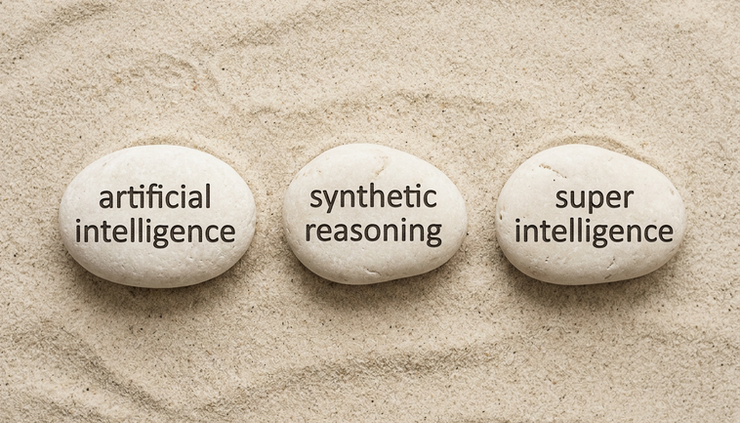
A practical framework for understanding the terms
The labels can feel abstract, so here is a simple framework.
Ask what the system is doing
If it is classifying, generating, predicting, summarizing, or recommending based on learned patterns, it is typical AI.
If it is forming original explanations, testing its own assumptions, and creating new methods with less reliance on examples, it may be moving toward synthetic intelligence.
If it would outperform humans across many fields and make powerful plans in the real world, the discussion moves toward super intelligence.
Ask how much human oversight it needs
Current AI works best with human review. It can assist, but people should check important outputs.
Synthetic intelligence would still need oversight, but the oversight would need to focus on goals, reasoning, and boundaries, not just spelling or factual errors.
Super intelligence would require broad safety systems, policy controls, and public accountability because the stakes would be much higher.
Ask whether the risk is present or future-facing
AI risk is already here. People can be harmed by biased decisions, false outputs, scams, data exposure, or poor automation.
Synthetic intelligence risk is partly future-facing because the concept is not fully settled.
Super intelligence risk is more speculative, but serious enough to influence current policy planning.
FAQ
What is the simplest difference between AI and Synthetic Intelligence?
AI usually refers to systems that perform intelligent tasks by learning patterns from data. Synthetic Intelligence refers to the goal of building machine intelligence that can reason, create, and solve problems more independently.
Is ChatGPT Artificial Intelligence or Synthetic Intelligence?
ChatGPT is best understood as Artificial Intelligence. It can produce very useful text, answer questions, and help with reasoning tasks, but it still depends on learned patterns and human guidance.
Is Super Intelligence the same as Synthetic Intelligence?
No. Synthetic Intelligence focuses on original machine reasoning. Super Intelligence refers to a level of capability that exceeds human ability across many fields. A future super intelligent system might use synthetic reasoning, but the terms do not mean the same thing.
Does Super Intelligence exist today?
There is no public evidence of a fully super intelligent system today. Current AI can beat humans at some narrow tasks, but super intelligence means broad superiority across many important areas.
Why does the U.S. government care about Super Intelligence?
The U.S. government cares because very advanced AI could affect national security, public safety, infrastructure, jobs, civil rights, privacy, and economic power. Policy work today is partly about reducing current harms and partly about preparing for more powerful systems.
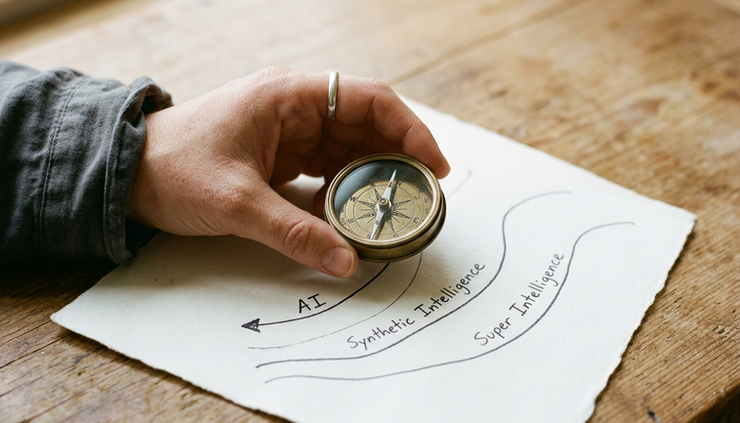
The takeaway is to use the right word for the right level of intelligence
AI is the technology people are using now. It can write, summarize, generate images, detect patterns, and support decisions. It is useful, but it imitates and predicts more than it independently understands.
Synthetic Intelligence is a more ambitious idea. It points toward machine reasoning that creates, tests, and explains original ideas rather than mainly copying patterns from human examples.
Super Intelligence is the most far-reaching concept. It describes systems that could exceed human ability across many fields, which is why it matters for U.S. policy, safety planning, and public accountability.
The clearest path forward is not panic or blind trust. It is careful use, clear definitions, and serious oversight. For more guidance on making sense of advanced technology and its practical impact, Talk to MLJ CONSULTANCY LLC.


Comments