

AI in Cybersecurity The Defender and the Threat

AI is changing cybersecurity on both sides of the fight. The same models that help defenders spot a suspicious login in seconds can help attackers write cleaner phishing emails, scan for weak systems, and imitate trusted voices.
That dual role makes artificial intelligence in cybersecurity one of the most important security topics of the next few years. It is not only a tool for automation. It changes the speed, scale, and quality of both defense and attack.
Security teams already rely on machine learning to sort large volumes of logs, detect strange behavior, and reduce alert fatigue. At the same time, cybercriminals use generative tools to remove language barriers, create believable scams, and test attacks faster than a human could do manually.
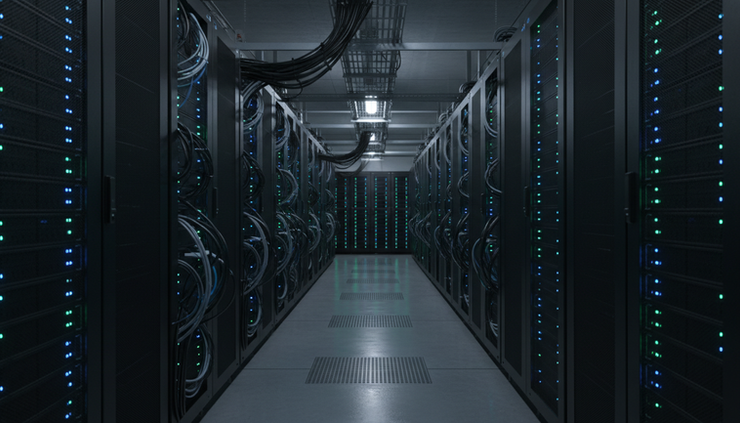
AI is changing the speed of cybersecurity
Traditional security tools often depend on known rules. If a file matches a known malicious signature, the tool blocks it. If traffic matches a known bad pattern, the system raises an alert.
That still matters, but it is not enough.
Attackers change malware, rotate infrastructure, and hide inside normal user activity. Cloud systems, remote work, mobile devices, and connected third-party tools create more events than a human team can review by hand. A single organization may produce authentication logs, endpoint alerts, firewall events, DNS lookups, and application data every minute.
AI helps because it can find patterns across large data sets. It can compare current behavior with past behavior, group related alerts, and flag activity that looks unusual even if it has never seen that exact attack before.
This is why AI has become a core part of modern security monitoring. It does not replace firewalls, patching, access control, or human judgment. It helps security teams see faster and respond with better context.
The same speed also benefits attackers. Automation can help them search for vulnerable systems, generate attack variations, and personalize scams. Cybersecurity, Cyberattacks, Artificial Intelligence AI are now linked in a practical way, not just as a theory or future concern.
How AI helps defenders see threats earlier
The strongest defensive use of AI is detection. Security teams need to answer a hard question every day: which signals are normal, and which ones point to real risk?
Real-time detection of unusual network behavior
AI systems can monitor activity across a network and compare it to expected patterns. This includes:
Login locations and times
Device behavior
Data transfer volume
DNS lookups
Cloud access patterns
Failed access attempts
Connections to rare or suspicious destinations
For example, an employee account may usually sign in from Ohio during business hours and access a small set of internal systems. If that same account suddenly logs in from another country at 2:00 a.m., downloads a large number of files, and attempts to access an admin console, AI-based monitoring can flag the behavior quickly.
No single event proves an attack. People travel. Work hours change. Systems behave strangely for harmless reasons. The value comes from correlation. AI can connect signals that look minor alone but serious together.
This matters because many breaches do not start with loud malware. They start with valid credentials, quiet discovery, and slow movement through systems. AI can help catch that early.
Unauthorized access becomes easier to spot
Unauthorized access often blends in because attackers may use stolen passwords, session tokens, or remote access paths that look legitimate at first glance.
Behavior-based detection helps by asking a different question: does this person, device, or service normally act this way?
A few examples include:
A standard user account trying to access sensitive administrator tools
A service account logging in interactively, when it normally runs in the background
A device connecting from a new network after months of stable behavior
A user downloading files at a rate far above their normal pattern
Security frameworks from organizations such as the National Institute of Standards and Technology stress the need to identify, protect, detect, respond, and recover. AI mostly strengthens the detect and respond stages, especially when the volume of signals is too high for manual review.

AI can reduce alert overload during incident response
Security teams often face too many alerts. Some are serious. Many are duplicates, false positives, or low-risk events. This creates alert fatigue, where analysts spend time sorting noise instead of investigating real threats.
AI can help with automated triage. That means it can group, score, and prioritize alerts so analysts know where to start.
A useful triage system may look at:
Signal | Why it matters |
Asset sensitivity | An alert on a finance system may need faster review than an alert on a test machine. |
User privilege | Suspicious activity from an admin account carries higher risk. |
Threat pattern | Multiple small events may match a known attack path when viewed together. |
Event timing | Activity outside normal hours may increase concern. |
Past behavior | A sudden change from a normal baseline can raise priority. |
AI systems can also connect related events into one case. Instead of showing 40 separate alerts, the system may show one story: a phishing email was opened, a suspicious login followed, a new inbox rule appeared, and files were accessed from an unusual location.
That saves time. It also helps newer analysts understand what happened without clicking through every raw log.
Still, automated triage needs guardrails. A model may rank an alert too low because it lacks enough context. It may also overreact to harmless changes, such as hiring surges, software updates, or business travel. Human review remains essential, especially for major incidents.
The goal is not to let AI make every decision. The goal is to let AI handle the first sort so people can spend more time on judgment, containment, and recovery.
Behavioral analytics can expose credential theft and fraud
Credential theft is one of the most common paths into an organization. Passwords get stolen through phishing, malware, reused credentials, or exposed databases. Once attackers have a valid login, they may not need to break in. They can simply sign in.
Behavioral analytics helps detect this.
Instead of relying only on a password, behavioral systems evaluate how an account behaves over time. They can learn typical patterns for a user, device, or role, then flag sudden changes.
Examples include:
A user who normally logs in once a day suddenly signs in 15 times from different regions
An account that rarely accesses payment systems starts changing vendor details
A customer account changes contact information, resets security settings, and requests a large transaction
A help desk account begins searching for executive profiles outside its normal workload
Fraud detection uses similar ideas. Banks, payment services, and e-commerce systems often compare transactions against normal behavior. A purchase amount, device fingerprint, location, account age, and recent changes can all affect a risk score.
This approach is not perfect. People move, change jobs, get new devices, and behave unpredictably. That is why behavioral analytics works best when paired with layered controls such as multi-factor authentication, least-privilege access, and clear review processes.
The benefit is clear: AI can spot risk when attackers use correct credentials but behave in the wrong way.

How attackers use AI to move faster
AI gives defenders speed, but attackers get speed too. The risk is not that every criminal becomes highly skilled overnight. The risk is that AI lowers barriers and increases output.
Faster exploitation through automation
Attackers can use automation to scan public-facing systems, compare them against known weaknesses, and test large numbers of targets. Public security advisories often warn that attackers exploit known vulnerabilities soon after disclosure, especially when proof-of-concept code becomes available.
AI can speed parts of this process by helping attackers:
Summarize technical vulnerability reports
Generate variations of malicious scripts
Sort targets by likely weakness
Translate technical steps into simpler instructions
Test phishing themes against different audiences
This does not mean AI creates risk from nothing. Weak passwords, unpatched systems, exposed admin panels, and poor network segmentation remain the real openings. AI makes it easier to find and use them at scale.
For defenders, that means patch management and asset inventory become even more urgent. If a team does not know what it owns, it cannot protect it. If critical updates wait too long, attackers may get there first.
Phishing gets more believable
Generative text has changed phishing. Older phishing emails often had obvious spelling errors, awkward wording, or strange tone. AI can produce clean, fluent messages in many styles and languages.
That matters because phishing depends on trust. A message that sounds natural has a better chance of getting a click, reply, or payment approval.
Attackers can use AI to create:
Personalized emails based on public information
Fake customer support messages
Job recruitment scams
Invoice and payment fraud messages
Text messages that mimic urgent internal requests
Deepfakes add another layer. A fake voice or video can make a scam feel more convincing, especially when paired with pressure and urgency. Law enforcement agencies have warned for years about business email compromise and social engineering because these attacks exploit human trust, not just technical flaws.
The best defense is a mix of training and process. Employees should learn warning signs, but organizations also need controls. Payment changes should require verification through a trusted channel. Sensitive requests should not rely on one email, voice message, or video call.
Autonomous agents add new risks
Autonomous AI agents can take a goal and perform a chain of tasks. In cybersecurity, that creates both useful and risky possibilities.
Defenders may use agents to gather logs, summarize an incident, check affected systems, or recommend containment steps. That can save time during a crisis.
Attackers may use similar agents to research targets, write messages, test code, or adapt tactics based on results. Even if the agent is not fully independent, it can make a less-skilled attacker more capable.
The deeper risk is control. An autonomous system may take actions that are too broad, too fast, or poorly understood. In defense, that could mean blocking legitimate users or shutting down systems unnecessarily. In offense, it could mean automated attack chains that spread faster than expected.
Security teams should treat agents as high-risk tools. They need permissions, logging, testing, and human approval for sensitive actions. A helpful agent with too much access can become a liability.
The best defense is human oversight plus AI support
AI works best when it supports disciplined security basics. It cannot fix missing backups, weak access controls, poor patching, or unclear incident roles.
A practical AI security strategy should include:
Clear data sources
AI detection depends on good logs. Authentication, endpoint, cloud, network, and application data need to be available and reliable.
Defined response rules
Teams should decide which actions AI can recommend, which actions it can take automatically, and which require approval.
Regular model review
Threats change. Business behavior changes. Detection logic needs testing and tuning.
Privacy safeguards
Behavioral monitoring can involve sensitive user data. Organizations need access limits, retention rules, and transparency.
Human accountability
AI can recommend, rank, and summarize. People should own final decisions for high-impact actions.
NIST’s AI risk guidance emphasizes governance, measurement, and risk management. That fits cybersecurity well. AI tools need the same discipline as any other security control: clear purpose, testing, monitoring, and review.

FAQ
Can AI replace cybersecurity analysts?
No. AI can help analysts sort alerts, find patterns, and summarize events, but it cannot replace human judgment. People still need to confirm context, make risk decisions, communicate during incidents, and handle recovery.
Is AI better than traditional security tools?
AI is not a replacement for traditional tools. It adds value by detecting unusual behavior and connecting signals, while firewalls, access controls, endpoint protection, backups, and patching still provide essential protection.
How are criminals using AI in phishing?
Criminals can use generative tools to write clearer messages, personalize scams, translate emails, and create fake audio or video. This makes some phishing attempts harder to spot by grammar or tone alone.
What is the biggest risk of autonomous AI agents in security?
The biggest risk is uncontrolled action. An agent with broad permissions could block valid activity, expose data, or carry out harmful steps too quickly. Sensitive actions should require human approval and strong logging.
What should organizations do first before adopting AI security tools?
Start with asset inventory, strong logging, multi-factor authentication, patch management, and clear incident response roles. AI performs better when the security foundation is already sound.
The takeaway for AI in cybersecurity
AI is both shield and weapon. It helps defenders detect strange behavior, prioritize alerts, and uncover fraud that might otherwise stay hidden. It also helps attackers move faster, write better scams, and automate more of their work.
The answer is not to avoid AI. The answer is to use it carefully, with strong controls and human oversight. Organizations that treat AI as a helper rather than a replacement will be better prepared for the next wave of threats.
For teams that want structured support in building safer systems and security practices, review the available cybersecurity consulting plans.


Comments